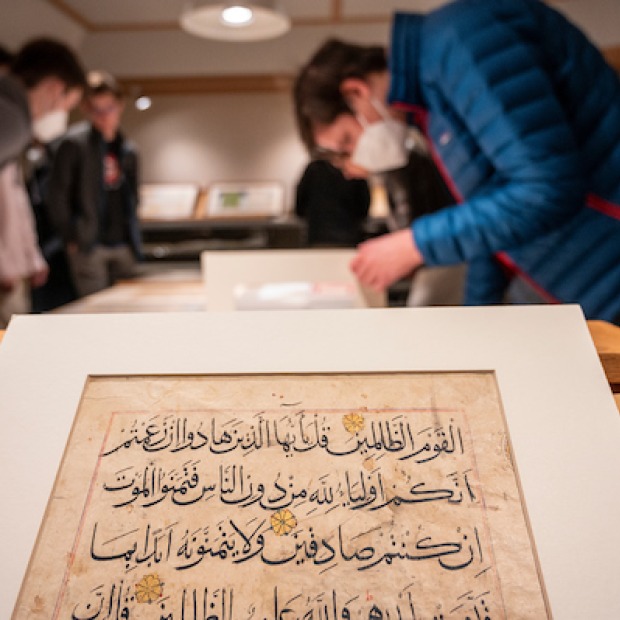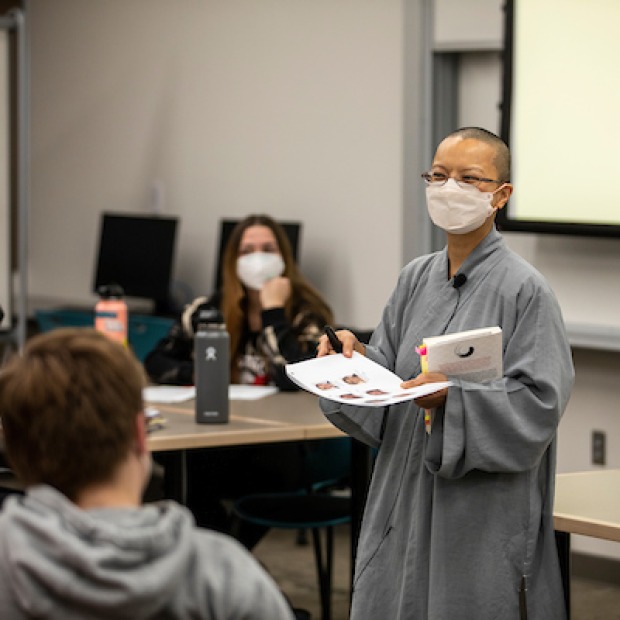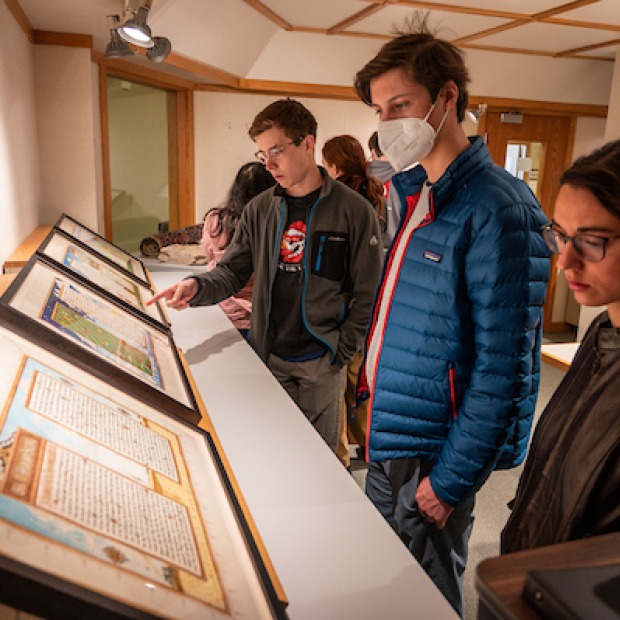

When you study the world's religious traditions, you learn about the histories, literatures, practices and beliefs that have shaped human societies. You study rituals and festivals that give meaning to time and place, disciplines that develop modes of perception and attention, ideas of holiness, justice, love, and beauty through which human beings have expressed their highest ideals.
Citizens of the world need working knowledge of the religious traditions that inform people's lives. Human interactions - whether they take place in a local medical practice or an international embassy, on the local school board or between international trading partners - are clarified and enriched when we understand whether, and, if so, how and why religious values orient the participants. So one needs opportunities to study and reflect on religious traditions that shape the societies to which one belongs, as well as opportunities to understand the beliefs and practices of others.
Majors in religious studies will be required, above all, to develop the capacities fundamental to the liberal arts: clear communication, critical thinking, and the careful and open-minded exploration of ways of life different from one's own. Some majors pursue religious studies as preparation for graduate study in religion and a teaching career at a college or university. Some go on to theological school and a career in ministry. Most majors, however, apply the skills and sensibilities developed through the study of religion to a variety of other professions, such as law, medicine, education, or international relations.