
Connecting Faith and Climate Action
Through a summer internship with the Iowa Faith & Climate Network, Roland Swank ‘29 explores how Islamic teachings can inform environmental stewardship and community engagement.
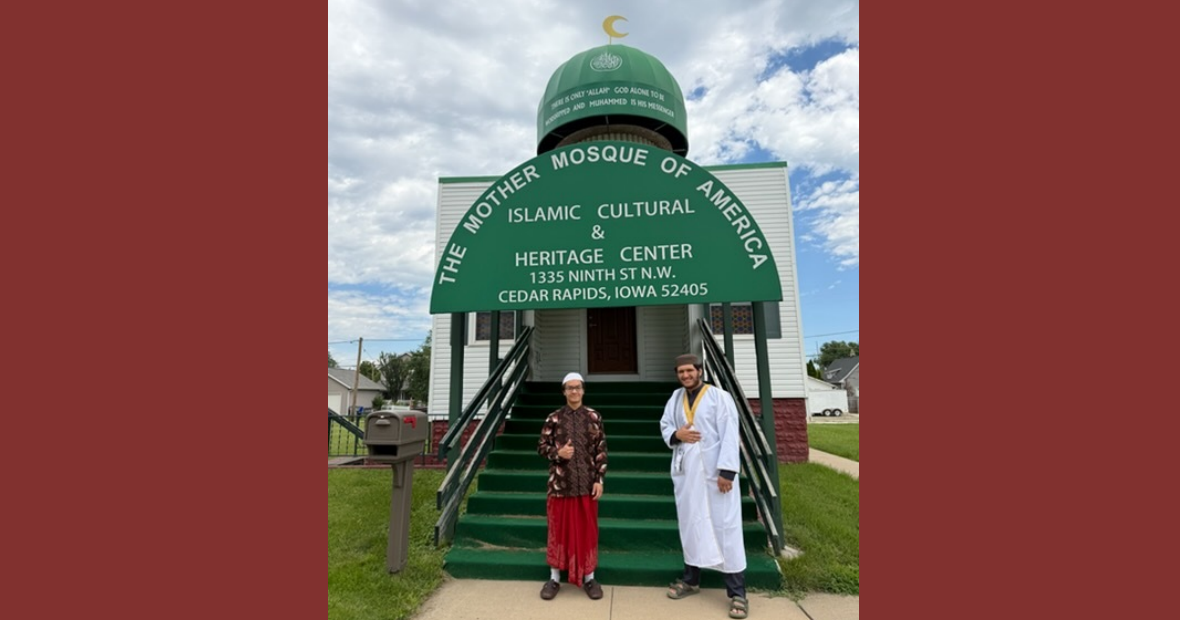
For Roland Swank ‘29 a summer internship with the Iowa Faith & Climate Network offered an opportunity to explore a question sparked by attending one of the organization’s conferences: What does Islam say about caring for the environment?
“What initially drew me to the Iowa Faith & Climate Network was attending one of their conferences. I was really intrigued by the discussion around permaculture, especially when Shaffer Ridgeway connected it to a verse from the Bible. That made me start wondering, Is there something similar within Islam? Are there teachings in our own tradition that speak to how we should treat the environment?”
That curiosity became the foundation for a summer spent exploring connections between Islamic teachings and climate action.
Faith and Environmental Stewardship
Swank’s internship has included creating social media content, conducting research, developing surveys, connecting with mosques and community organizations, and interviewing imams across Iowa. He also worked to identify broader themes connecting Islamic teachings with environmental stewardship.
“One of the biggest things I've learned is that Islam has a lot to say about environmental stewardship, even though climate change itself is a relatively modern issue. Concepts such as khalifah, mizan, and avoiding israf provide a strong foundation for thinking about our relationship with the Earth.”
One area of Swank’s research focused on wudu, the ritual washing Muslims perform before prayer, and the ways everyday practices can become part of conversations about sustainability and water use.
“I hope people take away that environmental stewardship can be incorporated into practices that Muslims are already doing every day. It doesn't always require something completely new. Sometimes it means looking more carefully at practices we already have and asking whether we are carrying them out in a way that reflects Islamic values.”
Learning Through Community
The internship has also given Swank experience with the day-to-day work of a nonprofit. Along with research, he has practiced graphic design, interviewing, social media management and community outreach while building relationships with mosques and other organizations.
“This experience has shown me that climate action is not just about understanding the science or knowing what needs to change. It's also about people, relationships, communication, and trust.”
Swank said the experience has changed the way he thinks about climate action and its connections to other parts of life.
“More than anything, I think this internship has changed the way I look at climate action. I don't see it as one isolated issue anymore. It's connected to our faith, our health, our food, our communities, our daily practices, and ultimately the way we understand our responsibility toward the world around us.”
--