
Exploring Education and the Future of Work Through Community Partnerships
In spring 2025, Assistant Professor of Education, Jonathan Larson piloted a course that invited students to explore experientially and critically how well education in the US has prepared students for the workplaces of today, and how it might adjust for those of the future.
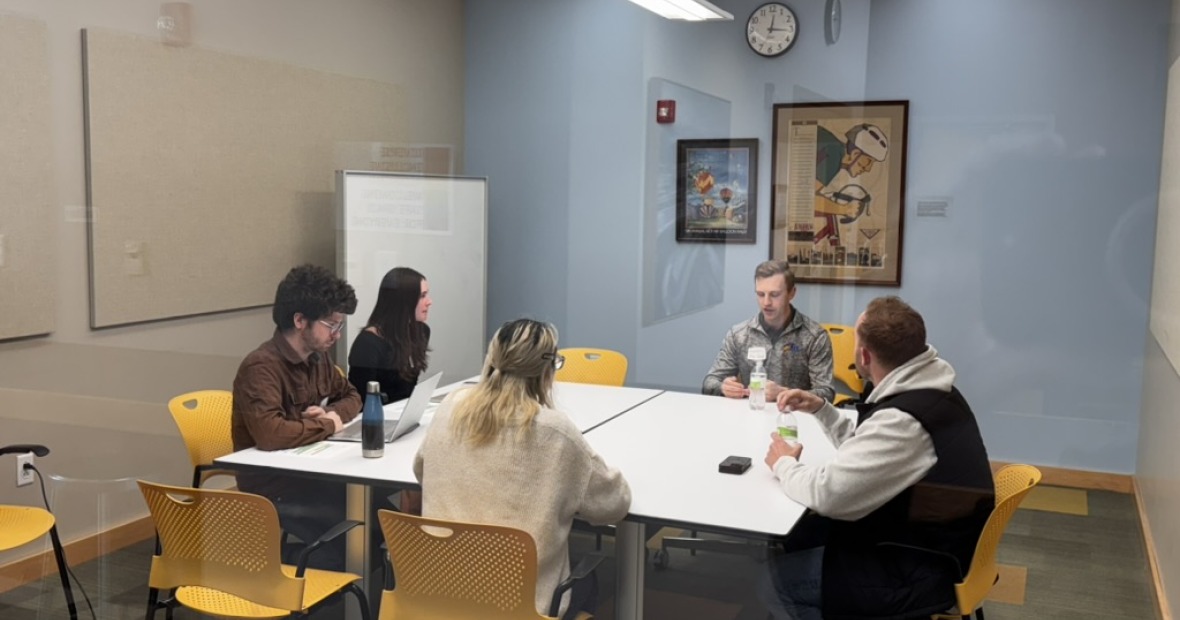
Through interviews with alumni, writing on public-facing issues at the intersection of education and employment, and focus group sessions with area employers, students gained firsthand insight into how effectively secondary and higher education in the US prepares students for today’s workplaces.
Larson said, "Through our activities, assignments, readings, and discussion this course was designed to help students explore strengths and weaknesses of how our system of formal K-16 education prepares students for the workplaces and workforces of today and how it might need to evolve in the future. After all, there is also an eternal question about how directly and in what ways a liberal arts education at Grinnell should focus on preparation for future employment.”
“Through a pedagogy partnership with students to develop the course with support from a Mellon Foundation grant to Grinnell College, this course has helped me expand on ways my department’s coursework with experiential learning can serve as a bridge between campus and community. The College’s Office of Civic Education and Innovation in the Center for Career Life and Service provided key logistical support that helped me evolve the initial idea for the culminating project and then co-create it with the Grinnell Area Chamber of Commerce. That collaboration made it possible for students to engage directly with local employers, understand challenges that they face in hiring and training their staff, and discuss potential solutions," said Larson.
Local organizations participating in the sessions included Bayer Crop Science, German Plumbing Heating and Cooling, Grinnell & Lynnville-Sully Veterinary Clinics, Jensen Mechanical, Key Cooperative, and UnityPoint Health – Grinnell Regional Medical Center. For many students, the experience offered an introduction to a side of the local economy and Grinnell community with which they had little contact.
Rachael Kinnick, President & CEO of the Grinnell Area Chamber of Commerce, shared, “Experiences like this bring education and industry together in meaningful ways. By creating space for students and local employers to listen, learn, and collaborate, we are helping build stronger pathways from the classroom to the workforce. This partnership reflects our shared commitment to supporting talent development, strengthening regional businesses, and preparing students for the evolving future of work.”
During the focus groups, the student teams engaged directly with local employers — asking questions about career pathways, internships, apprenticeships, and the evolving skills needed for success. These conversations helped students better understand how local businesses build talent pipelines and support professional development.
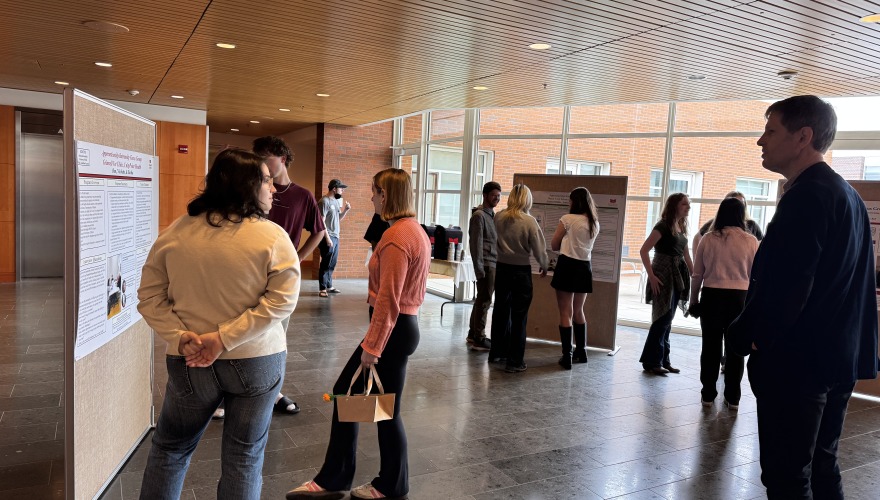
The student teams created research posters highlighting what they learned. The posters, displayed at the Chamber office for visits from participating employers and community ambassadors, reflected both the uniqueness of each organization and the creativity and curiosity students brought to the project. Visitors were invited to provide feedback and ask questions, offering an additional layer of dialogue that will inform students’ final reports.
The visit aligns with the Grinnell Area Chamber of Commerce’s strategic priority to strengthen connections between educational institutions and local businesses. By working together, community partners and educators are helping students better understand the future of work while also building relationships that can support workforce development across the region. The course also contributed to a relatively new category of course, Community Engaged Learning, that the CLS Office of Civic Education and Innovation has been supporting when offered by academic departments across the campus.
“I really enjoyed the Education and the Future of Work course. The connections I made through my community partnership were genuine and rewarding,” said Sasha Fine ’27. “I especially appreciated the opportunity to think about internships and careers on a more conceptual and academic level. It helped me see work differently, beyond the stress of summer job searches, and I believe the broader Grinnell community also gained valuable insight through these conversations.”
Associate Dean and Executive Director of Civic Education & Innovation, Susan Sanning, said “It always means a great deal to bring faculty, community partners, and students together in ways that support meaningful relationships. There is something powerful about helping foster conditions where folks can learn with and from one another as they engage.”