
Sharing Science Stories
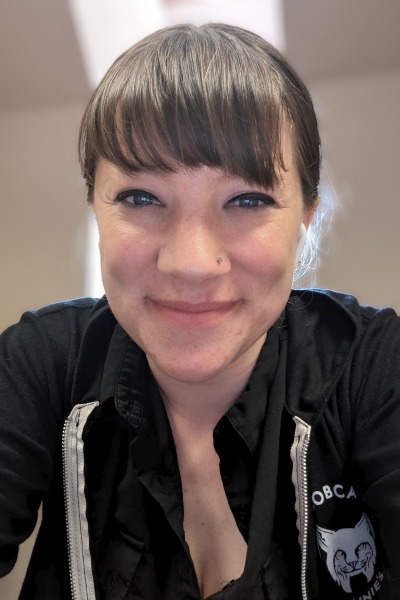
Math professor, Jenny Kenkel, taught an important tutorial about effective STEM communication.
Emma Stefanacci
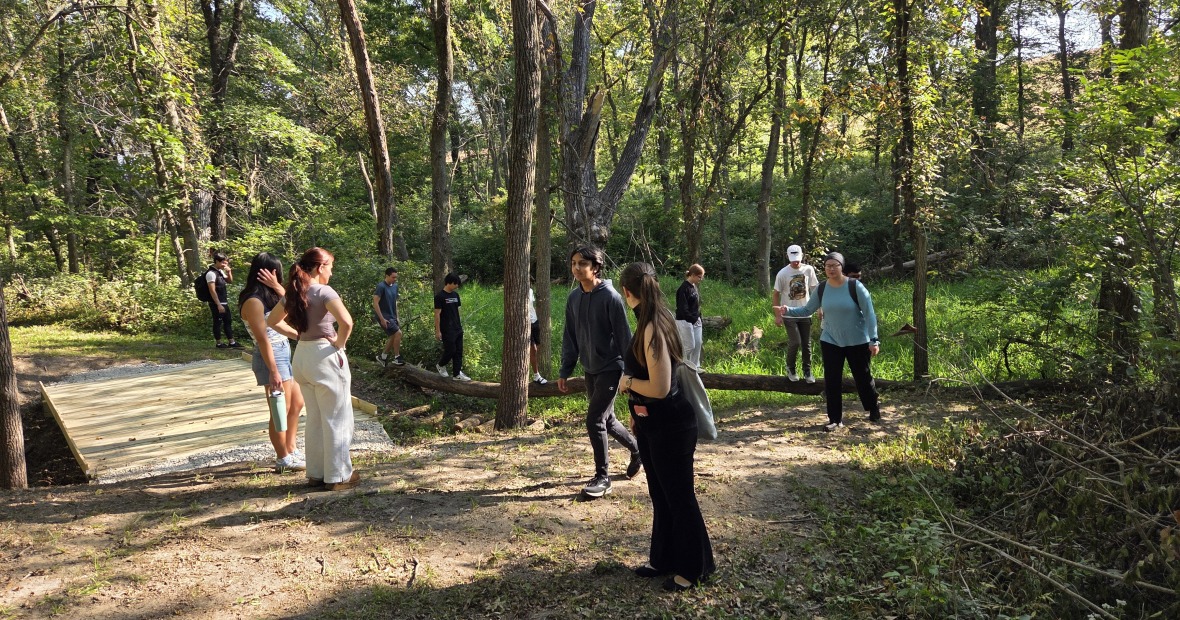
Every fall, first-year students take a tutorial course. These classes are meant for students to learn valuable writing skills while delving into their particular interests. One of the offerings this past semester was titled “Communicating STEM” and focused on science communication.
Jenny Kenkel, professor of mathematics, taught the course partly to address poor communication she had experienced. She was tired of sitting through bad math talks and wanted to learn how to make them better.
Students rank their tutorial preferences before arriving on campus, and many students were interested in this particular topic. Spencer Moody ’29 said the class was his first choice of tutorial. All his favorite teachers have been the ones who communicate the best, and he wanted to explore that more. He is interested in studying physics and doing the 3-2 engineering program, so this class was especially useful for him. He said, “I don’t think I want to go into communication or teaching but having the skills to be able to communicate science topics and break down complex subjects is useful in any career.”
Roland Swank ‘29 was also intrigued by the class. He specifically wanted to learn how to break down complex ideas in a way that makes the information easier to access. He likes the intersection of subjects and wants to take what he learned into his future studies.
The students’ interests fit well with Kenkel’s goals for the class. She wanted to highlight the importance of making science understandable to different audiences and for students to understand the nuance in different types of communications. She said she hoped to show students that communicating science intentionally is important because all science communication has an agenda.
Kenkel is particularly interested in the use of narrative to communicate. Humans are primed to process information through stories, so narrative can be a useful tool for conveying challenging science concepts. Moody said, “Narratives can be very useful since people remember more when information comes in a story. It’s also important to know who you’re telling the story to and change the narrative based on the audience.”
The students were especially interested in the class discussion about the role of individual narratives in science communication. One of their key writing assignments was a persuasive essay about the use of individual stories. Swank argued that focusing on individuals can be useful to outside audiences. He said, “Being able to point to a specific example of a scientist can make it easier to have discussions about science. It also makes it easier for audiences to see science as something done by people rather than a vague status quo.”
Moody agreed that narrative structure can be helpful for conveying information but also thinks that the focus on individual scientists can paint an inaccurate picture. He said, “Science is so communal and there's so much collaboration that the focus on individuals can’t fully represent.” While they may disagree about the role of individual stories, both students found this discussion and assignment interesting and useful for their own understanding of science communication.
Overall, the students found this tutorial and excellent entry into their time at Grinnell College. “I enjoyed the class a lot. Professor Kenkel seemed to find an effortless balance between group work and individual assignments. And we were able to both learn and reflect on science communication while building our writing skills,” Swank said.