
Student Leadership Shapes Grinnell Community Fridge
Through partnership, persistence, and shared commitment, Rachel Rudacille '26 and community partners are working together to build a shared resource that expands access to food in Grinnell.
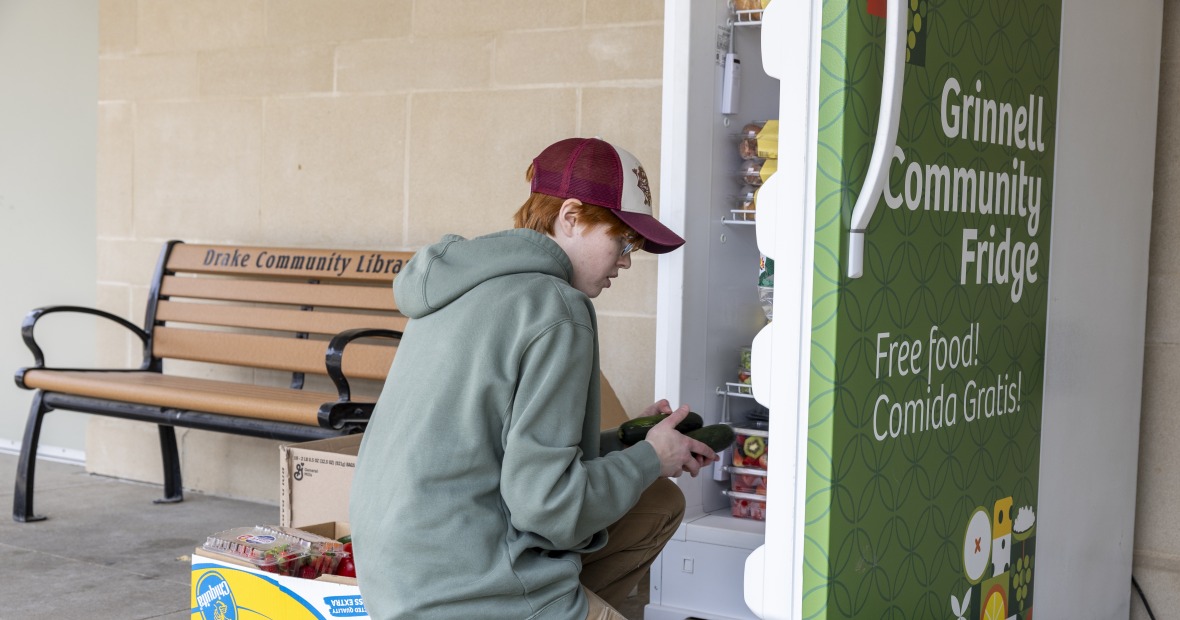
At the covered entrance of Drake Community Library, a simple but meaningful new resource is quietly making a difference. The Grinnell Community Fridge offers 24-hour, no-questions-asked access to fresh and recovered food — providing another layer of support for community members navigating food insecurity.
But behind the fridge itself is a story of relationships, civic engagement, and student leadership. For Rachel Rudacille ’26, the project has been more than a volunteer effort. It has been an opportunity to listen, learn, and help build something lasting alongside community partners.
A Student-Led Vision for Food Access
Rudacille’s involvement in food security work began soon after arriving at Grinnell College. Through volunteer experiences with the Drake Community Library Food Cupboard, the Food Recovery Network, and other local organizations, Rudacille developed a deeper understanding of how Grinnell's food access efforts work together and where gaps remain.
“I saw that it would fill an important need — providing 24/7 access to refrigerated food with no barriers,” Rudacille says. “Having watched the project grow from an idea into a real structure with real impact brings me excitement and joy. It’s something I care deeply about.”
Rudacille’s work reflects the broader mission of the Office of Civic Education and Innovation (CEI), which supports students in connecting academic learning, lived experience, and community knowledge to address real-world challenges. Through this initiative, Rudacille has helped translate civic learning into tangible community benefit.
Building Partnerships, One Relationship at a Time
Today, Rudacille works closely with Director for Civic Education and Innovation Ryan Solomon to coordinate volunteers, support donor relationships, and ensure the fridge remains safe and accessible.
Maintaining the fridge requires daily care — from checking expiration dates and cleaning the space to organizing weekly deep cleans and recruiting new volunteers. These responsibilities have given Rudacille a firsthand view of the coordination and collaboration required to sustain a mutual aid project.
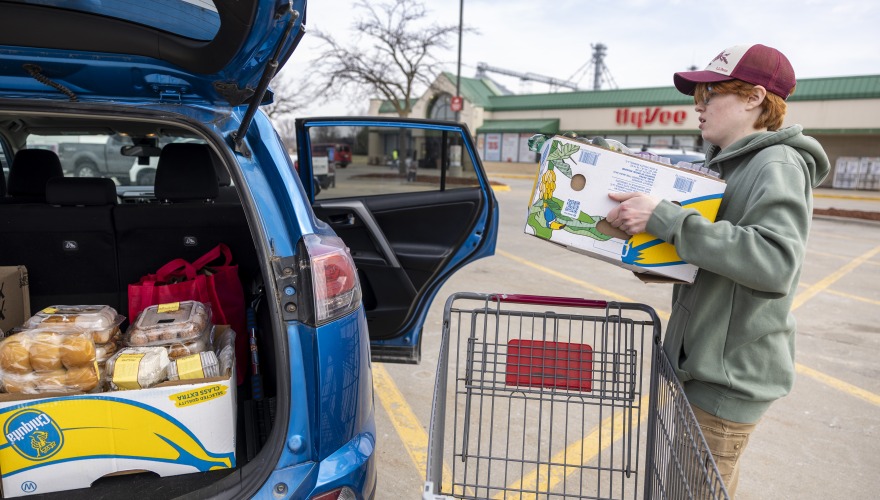
The effort has also brought together a growing network of partners. Local businesses and organizations including Hy-Vee, Grinnell Farm to Table, Jay’s Deli, Iowa Kitchen, Grinnell College Global Kitchen, and the Grinnell Organizing Collective have contributed food and support. Drake Community Library’s willingness to host the fridge made the project possible.
Solomon credits Rudacille’s leadership as central to the initiative’s success. “Working with them on the project has been a pleasure. Rachel’s energy and commitment made the project possible, especially when we hit roadblocks, which happened regularly,” Solomon says. “But Rachel would not have been able to help lead the project forward if they hadn’t been as consistently involved in the community. Over the past three years, Rachel learned to understand what the needs of the community are and has built relationships with community members who became key partners for the project.”
Supplementing, Not Replacing, Existing Resources
Grinnell already has a strong network of food access efforts that work together, including, the MICA Food Pantry, Grinnell Farm to Table initiatives, the Iowa Kitchen, Grinnell Community Meal, and the Food Recovery Network. The Community Fridge was designed to complement these efforts rather than compete with them.
Its unique value lies in accessibility and flexibility. By offering round-the-clock access to refrigerated food, the fridge helps bridge moments when other resources may not be available. It also reduces food waste by redistributing items nearing expiration that might otherwise be discarded.
Even in its early days, usage of the fridge has demonstrated clear community need.
Rudacille also emphasizes how the mutual aid model creates opportunities for people to participate in different ways.
“People don’t just want to be recipients of food — they want to have agency in the process,” they explain. “I’ve seen middle school students get excited about the fridge and ask how they can help. It’s wonderful that this project gives people that opportunity.”
Learning Leadership Through Civic Engagement
Through the project, Rudacille has gained experience navigating zoning questions, food safety protocols, volunteer management, and cross-sector partnership building. More importantly, they have personally witnessed how a shared purpose can bring diverse people together.
“One donor described bringing food to the fridge as ‘an opportunity to help the community,’” Rudacille says. “That idea has really stayed with me. Seeing people view the fridge not as a burden but as a chance to contribute is incredibly encouraging.”
Their experience reflects how civic engagement at Grinnell often extends beyond the classroom, creating opportunities for students to co-create solutions with community partners while developing leadership skills and a deeper understanding of local needs.
Looking Ahead
For Rudacille, long-term success for the Community Fridge will mean reliability and continued growth.
“I hope that people in Grinnell come to see the fridge as a consistent and dependable resource,” Rudacille says. “I also hope donor businesses begin to view it as a regular part of our local food system. Most of all, I want it to continue bringing different people together and lifting all of us up.”
How to Get Involved
Community members interested in supporting the Grinnell Community Fridge can help in several ways. Because of food safety protocols, prepared food donations must come from organizations with a ServSafe certification. Opportunities for monetary donations will be available in the near future.
Students, faculty, staff, and local residents are also invited to volunteer. Maintaining the fridge takes about 15 minutes and plays a key role in keeping the resource clean, stocked, and safe.
To learn more about volunteering and signing up here.
Organizations interested in donating food can contact Ryan Solomon at solomonr@grinnell.edu or Rachel Rudacille at rudacill@grinnell.edu.
Through collaboration, care, and civic commitment, the Community Fridge stands as a reminder of what can happen when students and community members work together to address shared challenges--one relationship and one meal at a time.