
A Tasty Tutorial: On BBQ
In a first-year tutorial, students explore barbecue’s history and culture while building the skills and confidence needed to thrive at Grinnell.
Tim Schmitt
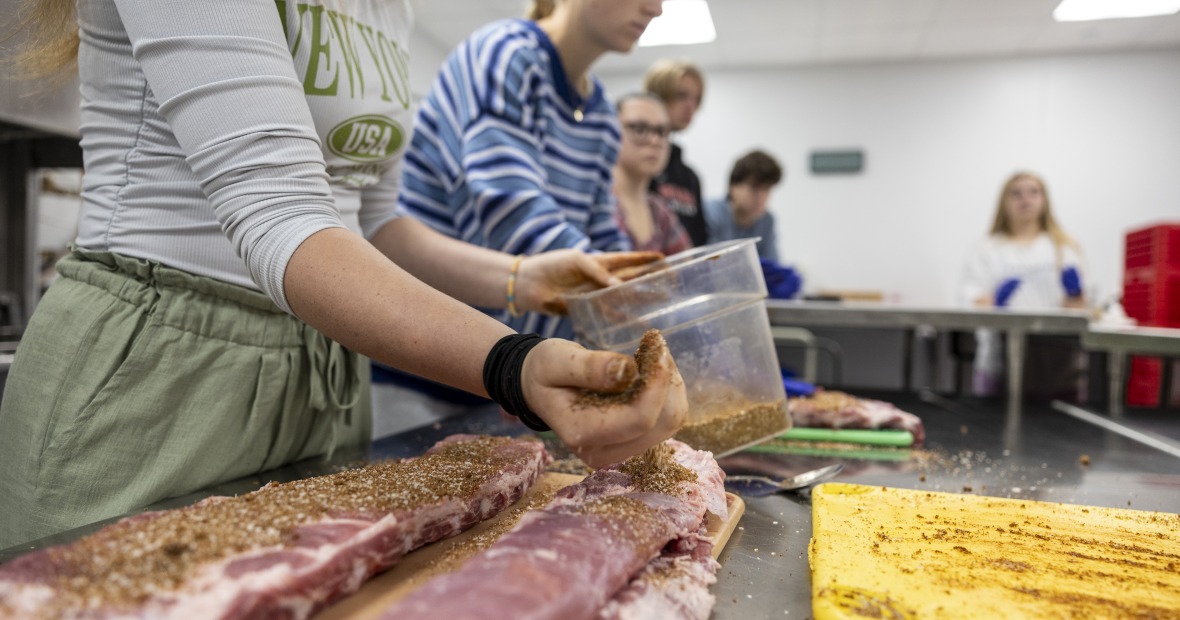
From regional barbecue traditions to the history and science behind a perfectly smoked brisket, Associate Professor Evan Couzo’s first-year tutorial, “On BBQ,” invites students to take a familiar subject and look at it in unfamiliar ways. Along the way, they’re discovering that barbecue is about much more than food — and that Grinnell College asks them to question, investigate, and connect ideas.
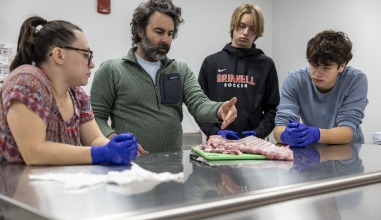
For first-year students Maya Shannon and Alice Thein, the course offers both a welcome opportunity to explore an unexpected topic and an introduction to how a Grinnell education works.
Couzo chose barbecue for its potential to bring together disciplines and spark curiosity. A longtime barbecue enthusiast, he designed the course to explore the subject through the humanities, social sciences and natural sciences.
Students examine regional traditions, consider barbecue’s connections to politics and early U.S. history, and explore animal ethics. A chemistry lab will let them make charcoal from wood. Tastings — including North Carolina barbecue, Memphis ribs and Texas brisket — bring the lessons to life.
Shannon, who chose the course because she loves barbecue, has been surprised by the complexity behind a favorite food.
“I honestly thought it was pretty simple,” she says. “I didn't really know too much about it.”
Now, she’s learning how cooking methods, regional traditions and cultural perspectives shape what barbecue means. She’s also discovering how strongly people feel about their preferred styles.
Thein was drawn to the tutorial because it stood apart from more serious-sounding course options. She, too, has been surprised by the depth of the subject, including differences between eastern and western North Carolina barbecue.
“I didn't know it had so much content behind it until the class actually began,” she says.
Learning how to learn
The First-Year Tutorial introduces students to Grinnell’s academic expectations while helping them develop the habits and skills they’ll use throughout their education. In Couzo’s class, frequent, low-stakes writing assignments encourage students to engage thoughtfully with readings, while discussion gives them practice sharing ideas and learning from classmates.
He sees the tutorial as a way to make academic rigor approachable. “It's a non-threatening way to learn the academic rigor of a
Grinnell classroom,” he says.
Shannon says the work is already changing how she approaches unfamiliar material. When a reading introduces a term she doesn’t understand, she makes a note and follows up with her own research. She also sees the emphasis on discussion as preparation for other classes. Participating regularly, she says, has helped her become more comfortable speaking up and engaging with classmates.
Thein likewise appreciates a classroom shaped by student contributions rather than prepared lectures. She has completed five or six writing assignments based on course readings and expects those experiences to help her in other classes.
Finding their place on campus
The tutorial also helps students learn about Grinnell’s rich academic resources. Couzo has arranged visits to Burling Library and the science library, where students will learn to find and read academic sources. He has also invited faculty members from across campus to join class meals, creating opportunities for students to meet professors and hear about their research.
An early assignment required students to visit their professors’ office hours — a task that proved especially valuable for Shannon and Thein.
“I was actually putting off going to office hours myself,” Thein says. “And it was really helpful because it allowed me to connect with my professors.”
Shannon found that getting to know professors as people made them easier to approach. Both students say they feel more comfortable seeking out faculty, an important step toward taking ownership of their education. For Couzo, those connections are as important as the course content. Students are learning to use campus resources, interact with professors and approach unfamiliar academic challenges with greater confidence.
He hopes they’ll also recognize that even an everyday subject can open the door to consequential questions. Barbecue, he says, “overlaps so much with race and our early colonial history in the United States.”
That’s the broader lesson of “On BBQ”: curiosity can be the beginning of serious intellectual work. By looking more closely at something familiar, students are learning how to ask better questions, explore complex ideas and build the habits that will serve them throughout their time at Grinnell.