Winning: How Grinnell Student-Athletes Find Success
Emma Stefanacci ’22
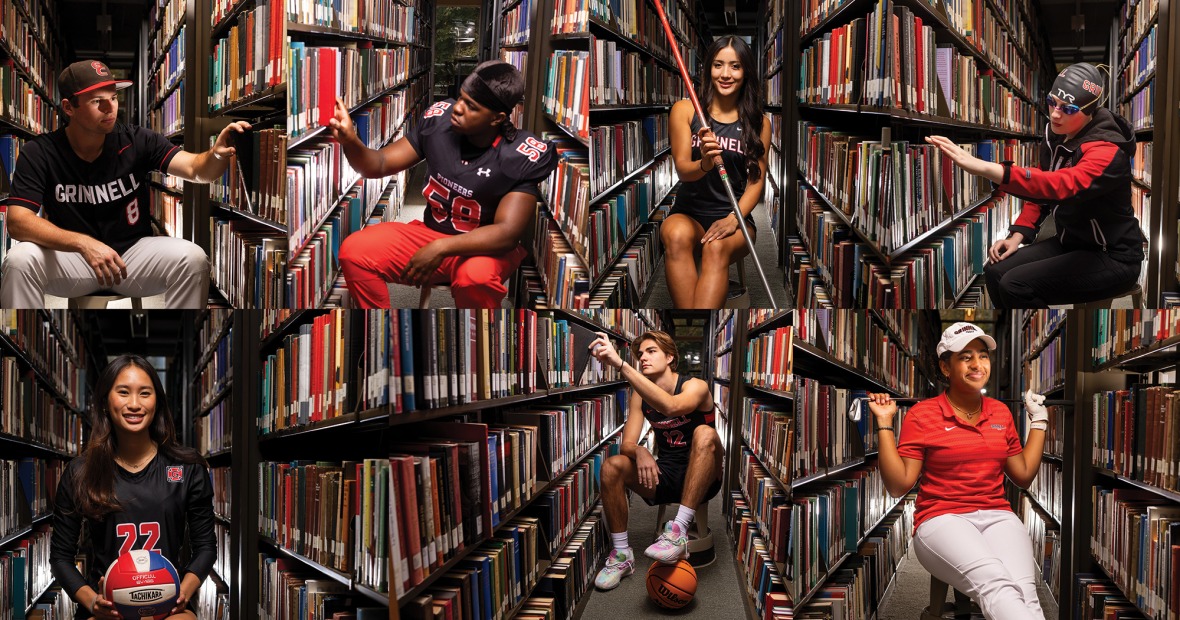
Every Grinnellian’s journey — guided by their background, area of study, and post-graduation goals — is remarkable in its own way. For the one out of every four Grinnell students who choose to participate in varsity athletics, their time on campus is further shaped by the commitment they have made to continually strive for the highest levels of learning and development, both in the classroom and in athletic competition.
An immense amount of work goes into being a high-level collegiate athlete and to being a member of a winning team playing in competitive Division III conferences. But it’s work student-athletes gladly do so that they can excel in the sports they love while preparing for a purposeful life and career.
Make no mistake, Grinnell student-athletes work hard to win. But most have a nuanced perspective about defining winning on their own terms. And along the way, they often discover that success as a student-athlete is also about experiences that create a unique bond with their teammates and strong sense of community.
Here’s a look at seven Grinnell student-athletes who, in addition to taking on the rigorous academics of a nationally ranked liberal arts college, are competing in DIII athletics.
The Journey Begins
Many student-athletes choose to attend Grinnell specifically because they can continue playing their sport while getting a quality education. Strahinja Nikolic ’27, an international student from Serbia, says, “I wanted to get the best education combined with basketball. I wanted to find the perfect balance between the two.”
Raised much closer to Grinnell, Keely Ballenger-Hudson ’28 of Des Moines didn’t consider Grinnell until her senior year, when her high school swim coach suggested it might be a good fit. Originally, she was opposed to living in a smaller town, but she changed her mind after a campus tour. She says, “Grinnell was actually the only school I applied to. On the tour, we watched a swim meet, and I could just tell that I would connect with the community. I went home and immediately opened the application.”
Jonathan Gaynor ’26 had a less direct route to Grinnell. He was planning on attending school in Florida, where he grew up, when he was recruited to play baseball for Penn State Fayette. Two years later, when his younger brother was recruited to Grinnell, he jumped at the opportunity to play together again. “So I applied for a transfer and got accepted, and next thing I knew, I’m over here. I was so excited to play with my brother, Jacob,” he says.
An Exceptional Academic Experience
Unlike some larger schools where athletes may feel pressure to prioritize sports over academics, Grinnell strikes a balance between the two. Many coaches also have a faculty role, most often within the Department of Physical Education. Currently, 17 of 20 varsity sports are covered by coaches who have faculty appointments, which can bring additional perspective when they remind players that they are students first, and schedules need to accommodate coursework, homework, practices, and competition.
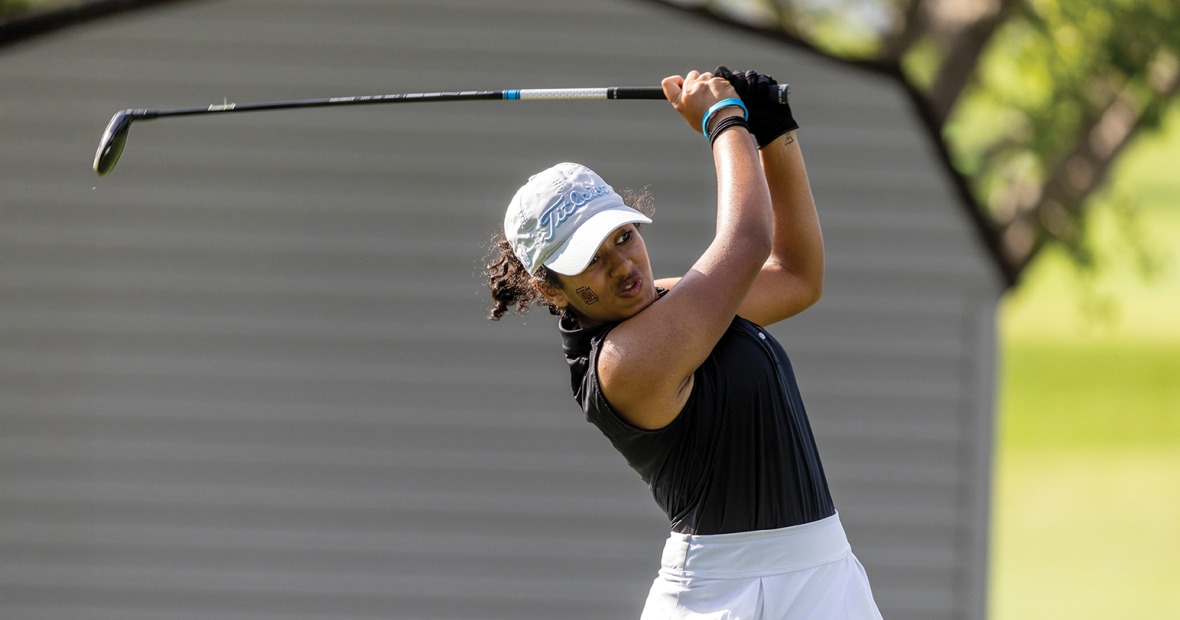
Grinnell athletes also don’t have to limit their studies to their specific majors. Kavya Keshav ’26, an international student from Singapore who plays on Grinnell’s women’s golf team, explains, “I think a lot of us came here because we have the flexibility to study what we want.”
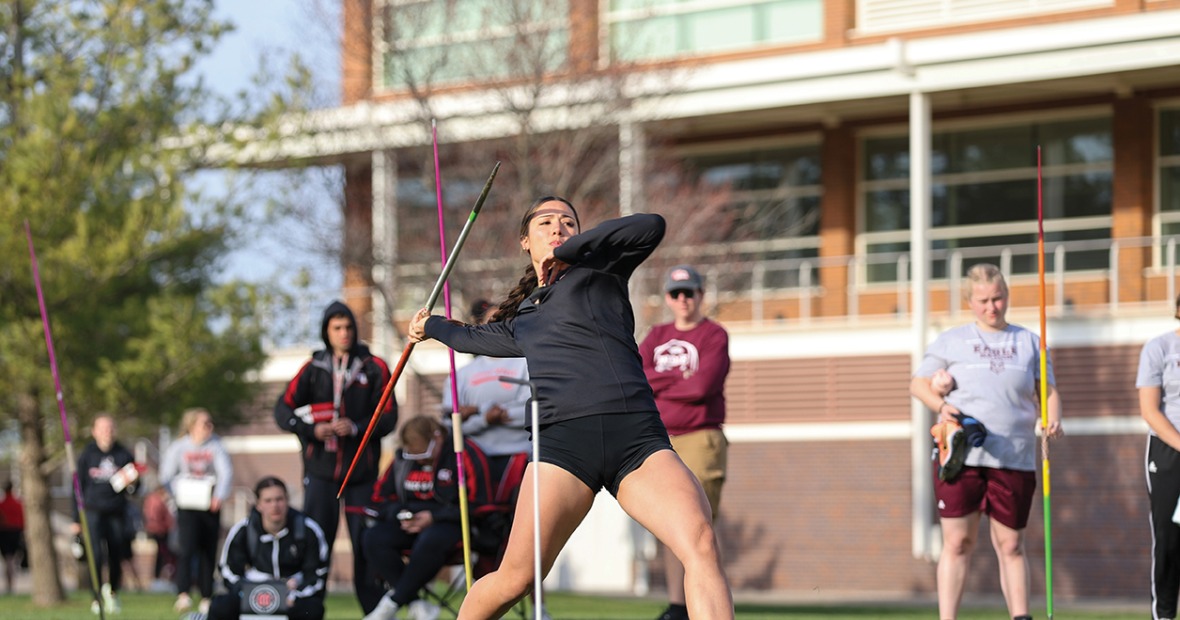
Student-athletes really do study the entire gamut of academics at Grinnell. For example, Nikolic is a philosophy major. Juniper Schwartzman ’27, a javelin thrower on the track and field team, is a physics major with an environmental studies concentration. And Ballenger-Hudson intends to double major in psychology and gender, women’s, and sexuality studies.
Because there is support for academic excellence, athletes also have room for academic exploration, including double majors. Volleyball player Gabby Choy ’26 studies both biochemistry and studio art. She says she feels she can do both a STEM-focused major that might lead to a healthcare career and her “fun major” so she can work creatively and take classes like experimental ceramics.
Other student-athletes come to Grinnell not knowing for certain what they want to study and appreciate that they have the chance to figure it out. Gaynor says he was always interested in STEM but took an anthropology class that he loved. He’s now taken more humanities and social studies classes than he expected.
Ball (and Javelin and Swim) Is Life
Most of these students started participating in their sport when they were in elementary school. The depth and importance of their relationship with their sport makes participating in varsity athletics an even more meaningful part of their Grinnell experience.
Nikolic says, “I wanted a good school, but I’m glad I’m on the team and can actually do what I love.” Such love often drives student-athletes, who can’t imagine not being involved in their sport. For them, honing their athletic skills has been as key a part of their education as writing code, conducting titrations, or comparing theories of societal structures. They simply have to work hard to make it all possible.
Nikolic notes that the high-tempo, high-scoring style played by the men’s basketball team is another part of what drew him to Grinnell. “I was definitely interested in being part of something like that. I wanted to test it out and see how I fit into it. Every practice, I learn something new and get better,” he says.
Not every Grinnell student-athlete has a lifelong relationship with their sport, such as Nikolic has had. Some have embraced sports later in life as a way to help them to expand their abilities and try new things. Grinnell student-athletes are constantly learning, exploring, and pushing themselves to succeed.
Michael Olufade ’28, who didn’t begin playing football until high school, started on Grinnell’s defensive line and now plays offensive tackle. Similarly, Choy was recruited as a setter for the volleyball team but has since moved to the back line as a defensive specialist. And Schwartzman had never thrown javelin until coming to Grinnell because it was not offered in the state where she grew up.
Finding Balance
Student-athletes say the benefits of their dual roles still come with some challenges, like striking a balance between academics and athletics. Missing classes for games, completing assignments while training multiple hours a day, and not having all their weekends free can be tricky and require a conscious effort to balance schoolwork and athletics. Gaynor says, “It does get hard, especially in season when you have games and practices on top of classes and it just starts piling up. It can be a real struggle.”
They also recognize that such challenges create opportunities to build new skills for life that can be essential to success after Grinnell. Olufade explains, “I always had this idea that struggle makes a person stronger. So, when I struggled with my schedule having two majors and football, it made me great at time management, and now in the off season I have so much free time.”
Likewise, Schwartzman says, “It is hard at times to balance everything. However, I believe that having a packed schedule forces me to be organized and plan accordingly so I can succeed as an athlete as well as in the classroom. This may mean doing homework on the bus, waking up earlier to do work, or starting assignments as soon as they are given. But we all figure out a way to get it done.”
Student-athletes make a special effort to get involved in extra- and co-curriculars on campus beyond their teams. In addition to throwing javelin, Schwartzman plays on the women’s basketball team, works as a grader/tutor, and takes French horn lessons. Keshav acts as the student-athlete mentor for her team, is a part of the Economics Student Educational Policy Committee (SEPC), and she makes time to take part in her friends’ many activities. Ballenger-Hudson works as a lifeguard, has an off-campus job, and runs a mental health club.
Credit College Resources with an Assist
Juggling so many activities requires impressive life and well-being skills, and students often find it useful to tap into campus resources for help.
In 2018, Athletics began a partnership with the College’s Student Health and Wellness service and University of Iowa psychology doctorate counselors to support student-athletes’ mental and emotional well-being. Thanks to a recent $250,000 gift from Austin Simmons ’90 and his wife, Kelly, there is now additional funding to hire a sports psychologist so this type of dedicated support can continue.
Student-athletes also can call on two dedicated strength and conditioning coaches to help them reduce injuries, maximize performance, and stay healthy. In addition to physical training, these coaches help students build good habits, positive mindsets, and a foundation that supports them not only in athletics, but in their lives beyond college.
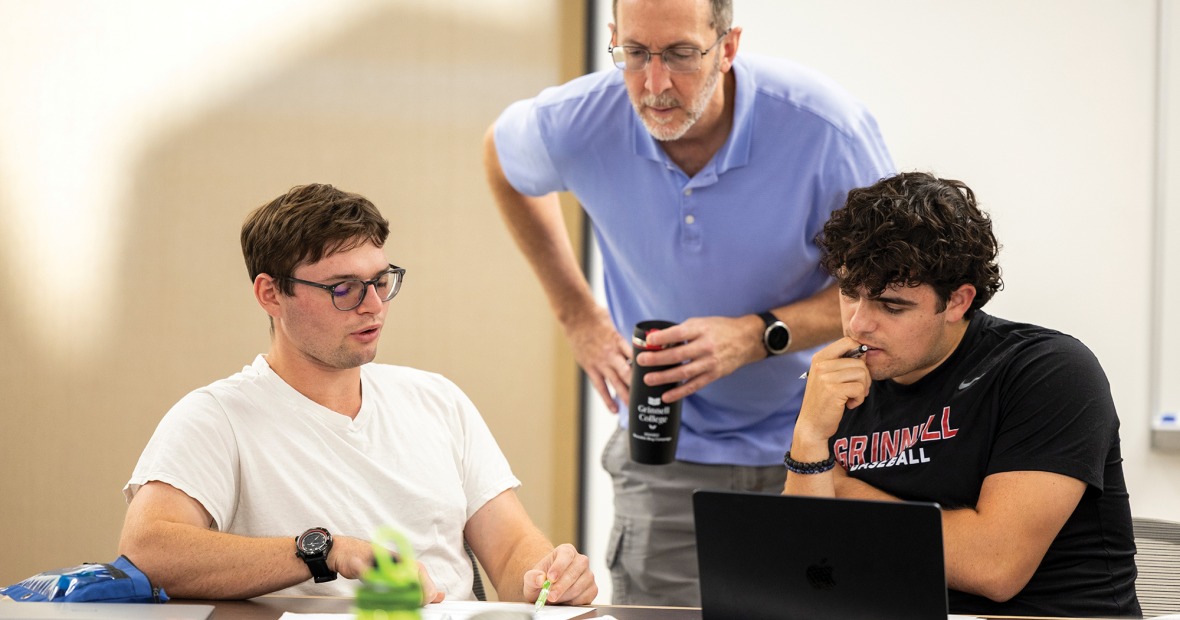
The Center for Careers, Life, and Service and the Academic Success Center offer many learning and life resources that all students can use. The support of both professors and coaches is also crucial for student-athletes. For instance, professors may help athletes reschedule assignments around competitions, and coaches encourage students to prioritize schoolwork.
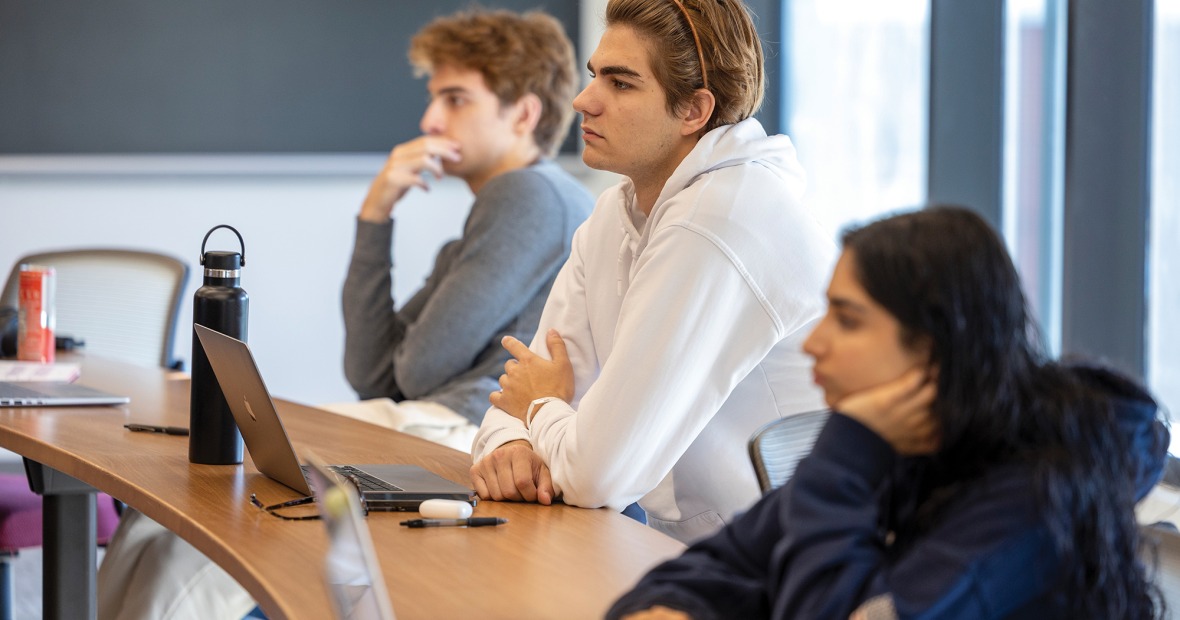
Ultimately, the team itself acts as a support system. Because they face many of the same challenges, they know how to support each other. Frequently, teammates will study together in a classroom after practice or will share internet hotspots on the bus so they can all get their homework done.
All About Community
The community of the team is a huge part of what makes the student-athlete experience special. Ballenger-Hudson says, “It’s so nice always having someone to sit with at meals. There’s always someone to talk to who cares about you. I’m so grateful for all the connections I’ve made on the team.”
Choy concurs. “We’re all just like a great group who are passionate, ambitious, and supportive. We lift each other up, whether it’s in a game or with our studies. I love that I get to hang out with them every day.”
Gaynor says that he thought it might be hard to connect with the team as a transfer student, but everyone was very welcoming. “They’re a bunch of caring guys, and after a few months, it was like I had always been part of the team,” he says.
Much of this sense of close-knit community comes from being part of a residential campus. “I think living here helps the team a lot because we’re going through experiences together. Not only basketball, but road trips, getting food off campus, or doing homework can help with the connection on the court as well,” Nikolic says.
Many favorite moments come when the connection between teammates flows naturally. Students share how fun bus rides can be (when they aren’t doing homework) because they get to hang out and be silly with their team. Olufade remembers one time when the bus broke down and the team played jokes on each other while stranded at a gas station.
When asked about some of her favorite memories, Keshav says, “We did well at Nationals last May, and that was awesome, but in general it’s about spending time with the team. Everyone gets along, so we do a lot of things outside of golf, too, and that is what’s the most fun.”
The different teams also support each other, especially for home competitions. It’s not uncommon for a majority of the fans in attendance to be other student-athletes.
Choy says, “Being a student-athlete feels like being part of a big community, and that’s really special.”