
We are very proud of our alumni! Our majors go on to work in architecture, arts management, community service, development, education, law, and museums and galleries — or physics, computer science, and economics. Those pursuing advanced degrees in art history have a brilliant track record. In recent years our alumni have been (or are) graduate students at the most prestigious academic institutions (UC Berkeley, Bryn Mawr, the Courtauld, Duke, Penn, Stanford, UCLA, Williams, and Yale, to name a few). Whether students choose to become specialists in art history or not, the art history major at Grinnell prepares them for a lifetime of deep engagement with culture and its significance both locally and globally. Here is what some of our alumni are doing today. If you are an alum, please keep in touch and send us your news! Thank you.
Olivia Wang ’25
(Art History) — Studying art history at Grinnell College was an extraordinary journey of intellectual growth and discovery. I was inspired by the breadth of courses that spanned multiple chronologies, geographies, and media, which challenged me to think expansively about what art is and how many frameworks can be used to approach it. A particularly formative experience was Theory & Methods in Art History with Professor Jenny Anger. That course equipped me to think conceptually about art while encouraging an interdisciplinary approach that connected art to anthropology, history, and broader cultural contexts. It shaped my conviction that art should be understood not only as objects, but as practices that connect people, spaces, and ideas across time and into the contemporary world.
Beyond the classroom, the school’s regular roundtables introduced me to the wide career possibilities in the arts. I gained professional experience at the Grinnell College Museum of Art and the Grinnell Historical Museum, where I learned object handling, museum logistics, and visitor engagement. I also worked remotely with a commercial gallery in Southern California, managing its online presence, liaising with artists, and assisting with event planning. This broadened my understanding of the for-profit sector and deepened my appreciation for marketing and strategy in sustaining artistic practice.
With mentorship from Destini [Ross], Grinnell’s career adviser, and Professor Eiren Shea, I identified my strengths and stood out in various applications. Now, as an MA student at Bard Graduate Center in New York City, I am honing my research focus while gaining experience in development and fundraising.
Az Fuller ’22
(Art History and Economics) — My decision to major in art history was not necessarily intentional, but a significant decision in shaping my professional career and involvement in the arts since graduating. The classes Modern Art in Europe from 1900–1940, Art Since 1945, and Contemporary Art cemented my passion for 20th and 21st century art and shaped my research and critical writing skills.
Since graduating and moving to my hometown of New York City, I have been fortunate to find work in the arts where I have utilized my background in both art history and economics. I’ve worked at Christie’s as a coordinator supporting New York auction sales before starting my current role within the Exhibition Planning and Administration team at MoMA. In this position, I monitor, reforecast, and report on MoMA’s annual exhibition program budget; support the management of major exhibitions and offsite projects; manage the annual film programming budget; and assist the senior deputy director of exhibition and collections in exhibition scheduling.
My experiences as an art history student at Grinnell have led me to find a unique role in the arts where a diverse skill set is valued. I am grateful for the flexibility of the department and open curriculum of Grinnell which allowed me to figure out my academic interests throughout my time as a student, ultimately leading me to my current role.
Katie Buhman ’21
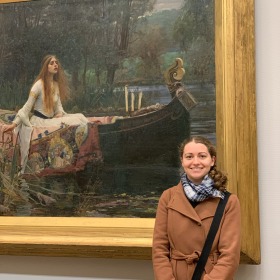
(Art History and French) — I came to Grinnell with the intention to major in English, but taking an introductory art history course altered both my major plans and the trajectory of my life post-Grinnell. In art history, I found artworks as a new kind of visual and material text that expanded beyond the written word and could fruitfully intersect with countless other fields while speaking to larger cultural ideas that continually sparked my curiosity. With guidance from Jenny Anger and Eiren Shea, I explored a wide range of art and topics, from female artists with mental illness to the intersection between historical art movements and contemporary visual media trends.
There are always fascinating new questions for me to ask of the art objects I encounter, and this led me to pursue an master’s in art history at Indiana University, Bloomington where I studied illustrations of fairies in children’s books in special collections and engaged with the material traces children left on those illustrations. Now in the art history PhD program at University of Wisconsin, Madison, I have focused my research on Victorian art and intend to pursue my lifelong interest in the fantastical by studying fairy paintings in my dissertation.
Without that remarkable first art history course at Grinnell, I would never have been able to discover my love for this discipline and share that passion with others as an instructor. The faculty of the department were key in shaping the art historian I would become, always encouraging me to engage with the ideas that inspired me most and offering continual support and encouragement for my studies. For me, Grinnell’s art history department was a space where I could ask new and exciting questions, discuss art and research with others, and above all, a place that enthusiastically fostered and encouraged my endless curiosity.
Vivien Makos ’19
(Art History and Classics) — During my time at Grinnell College, I was an assistant to the curator of the Print and Drawing Study Room — a job I held for two years. In this position, I handled, cataloged, and managed prints, drawings, paintings, and other objects in the College’s collection. It was that job that nurtured my passion for working in museums and maintaining art objects for the education of future patrons.
Now, as a 2019 alum, I find myself doing similar work as the assistant registrar for the collection management system at Winterthur Museum, Garden & Library. Not only am I cataloging objects within the collection, but I also assist students from the University of Delaware with their in-depth research on those objects. Other projects in this position have me at the intersection of arts and information science. For example, I am currently working on updating the entire museum collection website to provide improved information access for our patrons. I am always grateful that my experience at Grinnell College gave me advisors who encouraged my pursuit of preserving important cultural and historical legacies for the education of future generations and who prepared me for this type of work.
Xena Fitzgerald ’17
(Art History) — During the fourth-year art history seminar at Grinnell, I wrote a thesis that inspired me to continue my art history studies at the graduate level. I wrote about a series of contemporary paintings in a church in Cuzco, Peru. Although the topic was outside the scope of the expertise of the faculty, I was encouraged to pursue my interest and I felt supported in the research and writing process. I enjoyed the thesis research so much that I left Grinnell with a strong desire to further my study of Latin American art and develop a focus on the colonial period.
I took a gap year to complete applications and Jenny Anger and Eiren Shea graciously and judiciously advised me in the process. I completed my MA at Southern Methodist University in Dallas in 2020 and then went on to pursue my PhD at Tulane University in New Orleans. I am nearing the end of my PhD journey now and I still think about my time at Grinnell often. I believe that the rigorous (and fun!) art history courses at Grinnell provided me with a strong foundation for the reading, writing, and visual analysis skills that have set me up for success in my graduate work. I have a deep sense of gratitude for my time at Grinnell, especially for my wonderful classmates and the excellent faculty.
Lauren Toppeta ’17
(Art History) — I fell in love with the study of art history after my first 200-level class with Professor Anger. That class, Modern Art in Europe from 1900–1940, told me I wanted to be an art history major, and subsequently inspired me to pursue summer internships at the Leslie-Lohman Museum of Gay and Lesbian Art in New York City, and at Faulconer Gallery right in Grinnell. After graduating in 2017, I moved to my hometown of New York City to pursue a career working in the arts. I wasn’t sure exactly what kind of job I wanted, so I ended up interning at a gallery briefly before landing my favorite job to date, working on the team at SPRING/BREAK Art Show to organize and run the show during Armory Week 2018 (with a lot of babysitting in between). SPRING/BREAK was only a temporary job, and left me back on the search sooner than I would have liked. After striking out after many first-round interviews, I began to form a more concrete idea of the kind of work I want to pursue: art archives. Now, after working for a little under a year at a private school in Manhattan as part of their two-person communications team to be able to afford a life in New York, I will head off to obtain a dual degree in art history and library science in the fall of 2020 at Pratt Institute! My time as an art history student at Grinnell strengthened my writing abilities across countless categories, and has given me the skills to apply a critical eye to all that I encounter, professionally and personally. I am certain that without the growth the art history department fostered in me, I would not be on exactly the track I want to be, living in New York City, awaiting the start of my graduate career.
Elizabeth Allen ’16
(Art History) — Studying art history at Grinnell taught me to think critically through close observation, write with precision, and approach my work with confidence. Whether in class or during office hours, my professors gave me the courage to defend the ideas that mattered to me and the tools to articulate them.
After graduating, I spent two years teaching in France and in the U.S. before deciding to pursue my studies in art history at the Sorbonne in Paris. There I completed a master’s in art history, researching the Japanese avant-garde group Gutai, studies that I had begun at Grinnell with the support of my advisor Professor Anger.
I then completed a master’s program in curatorial studies, also offered at the Sorbonne. I had a formative internship at the Picasso museum in Paris, and after finishing my degrees I worked as a curatorial assistant at the Centre Pompidou. My interest in curatorial studies had similarly bloomed at Grinnell, thanks to the rigorous and immensely rewarding exhibition seminar with Professor Lyon.
Today I work at an artists’ rights society in Paris, managing and developing grant and prize programs for artists and visual arts organizations. I enjoy working directly with artists and being able to support them in their projects. The curiosity and critical eye I developed as an art history major continue to guide my work today.
James Marlow ’16
(Art History and History) — Majoring in art history at Grinnell was one of the most consequential decisions I made. The discipline’s emphasis on close looking and critical interpretation reshaped how I think, teaching me to question appearances and consider the systems that produce meaning.
One formative experience was the travel course Berlin: Borders and Transgressions, co-taught by my advisor, Professor Anger, and Professor Dan Reynolds. We studied Berlin’s architecture as territories of historical rupture and political action. While at Grinnell, I also interned at the New Museum of Contemporary Art and the New-York Historical Society, and worked as a research assistant for Professor Anger.
After graduating in 2016, I returned to New York and joined ITHAKA, the nonprofit behind JSTOR and Artstor. I worked on image licensing and copyright clearance for cultural heritage collections, applying my art history training to questions of access and intellectual property. That experience introduced me to legal frameworks I later expanded on in a broader paralegal role.
Today, I work in Legal Operations at Khan Academy, an educational technology nonprofit, where I focus on legal systems, data privacy, and compliance. The field is different, but the habits I developed as an art history major remain central: reading systems closely, mapping how parts fit together, and seeing beyond surface presentation.
I’m grateful to the Art History department at Grinnell not only for what it taught me, but for how it shaped how I think: critically, structurally, and with attention to how meaning is made and mediated.
Eli Woods Harrison ’16
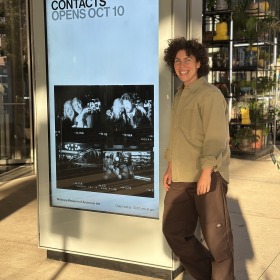
I came to Grinnell uncertain of where my many interests would lead me. Everything became clearer after my first art history class, when I realized that there was a field of study that embraced the interdisciplinary approach to learning and looking that I craved. My work as Professor Anger’s research assistant cemented my interest in 20-century art and revealed the unique discoveries that sustained scholarship can yield. One highlight was a MAP on the Erster Deutscher Herbstsalon, a huge but forgotten modern art exhibition hosted by the Der Sturm gallery in 1913. Together, Professor Anger, James Marlow ’16, Rebekah Rennick ’17, and I researched the show and collaborated with a team at the University of Iowa to create an interactive digital reconstruction of the exhibition space in which students could curate the myriad featured artworks. The project incited my passion for curatorial work and proved critical to my senior thesis “Early Sonia Delaunay: The Avant-Garde at Home” (advised by Professor Anger and recipient of the 2016 Phi Beta Kappa Scholar’s Award).
After graduating, I returned to school at the Williams Graduate Program to continue grappling with the questions raised by my studies at Grinnell. I’m currently working as a curatorial fellow at the Whitney Museum of American Art in New York, where I recently curated the exhibition Ken Ohara: CONTACTS (Oct. 10, 2026–Feb. 8, 2026). I’m now working on a forthcoming exhibition of work by the lithographer Mabel Dwight and workshops that highlight queer artists in the collection. Nothing could have better prepared me for my graduate studies, curatorial work, and independent research than my time in Grinnell’s art history department.
Recent workshop: “We Glimpse the City in Pieces”
Maria Shevelkina ’15
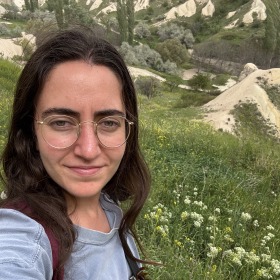
While I grew up immersed in art (both parents are artists), I arrived at Grinnell with the intention of straying from the apple tree. But the passion evidently runs through my veins: I declared Art History as my major after a rousing in-class debate on whether art and craft are of two different orders. Since then, I strive to maintain the transformative power of craft, technique, and process within the creation of art.
During the summer after my junior year, Grinnell funded my internship at the Ferapontovo Monastery Museum in northern Russia. After graduating, I was a fellow at the MFA Houston in Prints and Drawings. I returned to my hometown of New Haven where I worked as an apprentice for a local conservator as well as Site Projects, a community arts revitalization program. I also learned how to weave at the local art school. I began working at the Josef and Anni Albers Foundation as the archives assistant, and simultaneously acquired my master’s at Hunter College, CUNY. This range of experiences allowed me both breadth and depth in the contemporary art world.
I decided I preferred academia and am now finishing my PhD at Stanford University, where I am writing a dissertation on architectural ornamentation. The project was born from a transformative two-week excursion into the heart of Cappadocia in Türkiye, where I also spent a year on fellowship. I hope to always maintain a close connection between environment, site, and artistic creation, and I credit my studies at Grinnell with stoking my fire and keeping me grounded.
Tim McCall ’15
(Art History and Chemistry) — The art history department did an excellent job at setting up students to confront art in a really expansive way. Each seminar, with excellent professors and inquisitive students, coaxed me towards another, then eventually to the major. I had the great privilege of working with a huge variety of works on paper with Kay Wilson in the Print and Drawing Study Room. A highlight was the exhibition seminar with Professor J. Vanessa Lyon, wherein the seminar group developed and curated Against Reason: Anti/Enlightenment Prints. I ended up pursuing similar research in the MA History of Art program at the Courtauld Institute.
I am still working through the difficulties of thinking, researching, and writing (occasionally teaching) about art as a PhD candidate at the University of British Columbia. It is still very satisfying and endlessly frustrating! My dissertation is about political subjectivity and civic identity in early modern Bologna. Outside of research, I organize printmaking workshops and serve on the advisory council at the artist-run space SOCIETY.
At the center of the different ways I got to interact with art and art history at Grinnell was the great pleasure of spending time lost in contemplation and conversation with my peers, who like me were absorbed by the striking power and innumerable propositions of images. Art history seminars at Grinnell introduced me to the social element of art history, and this is certainly what drives my continued enthusiasm today.
Ian McCallum-Cook ’12
(Art History and Physics) — Art has been a lifelong passion of mine. It was the impetus behind my decision to study abroad in the Netherlands, where I spent five months of my junior year investigating studio and modern art. It has also proved a valuable counterpoint to my studies in physics, as I have always found it to foster creativity and an aesthetic awareness often lacking in the sciences. At Grinnell, I learned to appreciate this complementary relationship as I pursued a double major in physics and art history. After Grinnell, I continue to find considerable value in my art history background. Recently I was interviewed by a number of tech companies for internship positions, and I was surprised at how many asked about my art history experiences. A representative from IBM told me that my degree was one of the main reasons that I was asked to interview, as their company wanted well rounded and creatively minded employees. Apparently, I stood out favorably from the crowd; they have since offered me a job, which complements my graduate program in applied physics beautifully.
Rebecca Park ’10
(Art History and French) — The culmination of my art history study at Grinnell has to be the “Repeat, Reveal, React: Identities in Flux” Exhibition Seminar led by Professor Jenny Anger in fall 2009, which included the opportunity to assist with the editing and design of the accompanying catalogue. The department was also extremely helpful in providing support for interdisciplinary study, providing opportunities to combine my interests in both French literature and art. My study abroad program (Hamilton College Junior Year in France, 2008–09) in Paris featured coursework at the École du Louvre, and the art history faculty, especially Professor Susan Strauber, provided valuable research assistance for my MAP (“La Femme au travail chez Zola et chez Manet”), although it was done under the auspices of the French department (with Professor Philippe Moisan). My career opportunities following graduation were varied and included interning in the Publications Department at the National Museum of Women in the Arts in Washington, D.C.; working in public relations for an architecture firm (AWP) in Paris; and working as a research assistant for Professor Anger. I eventually relocated permanently to France, and in 2014, I joined the Terra Foundation for American Art at their Paris office, where I currently work as Program Associate, Publications & Communications.
Amanda Underwood ’10
(English and Gender, Women’s, and Sexuality Studies) — My experience in art history at Grinnell helped me discover how to translate my skills and interests into a career. I was an English major and originally started taking art history classes to flesh out my knowledge of aesthetics, critical theory, and artistic movements. In the fall of 2009, I participated in Jenny Anger’s exhibition seminar and loved collaborating with a small group of students to curate, design, promote, and write about works from the Grinnell College permanent collection. It was probably the most challenging thing I did at Grinnell, and it showed me that Grinnellians really thrive at the intersections of different fields of knowledge. After learning more about museum careers through internships at the Minnesota Children’s Museum, the Smith College Museum of Art, and the Minneapolis Institute of Arts, I now work for the University of Minnesota College of Design in Development and Alumni Relations. I am in the business of building relationships around people’s passion for art and design; how cool is that? The ability to critically analyze creative work and the drive to question dominant interpretations guide my work every day. I am also an master’s candidate in the strategic communications program at the University of Minnesota.
José B. Segebre ’09
Although I grew up in San Pedro Sula, coming to Grinnell felt oddly natural — from one middle-of-nowhere to another. I came to study literature, but promised my family economics, and instead took David Harrison’s advice to try art history. I became so fascinated by images, their power and language that I majored in art history. Susan Strauber became my advisor and supporter, while Jenny Anger and Dan Reynolds’s seminar on Berlin introduced me to my current home city. Grinnell wasn’t easy, but the people I met there helped me: come-out, desire, achieve intellectual (and financial) independence.
Graduating amid a recession and coup in Honduras, I moved to my grandparents’ in Monterrey, later relocating to México City. I worked for an American foundation and kept corresponding with Lesley Wright, who encouraged me to further pursue art.
In 2012 I moved to Frankfurt. Here I learned German, worked as assistant curator (Portikus, 2014) and completed an master’s in curatorial studies (Goethe Universität, Städelschule, 2018). I wrote on film and contemporary art, and produced exhibitions with artist Anne Imhof, including the German Pavilion at the 2017 Biennale di Venezia (Golden Lion).
I now curate a series of performative and installative screenings with artist François Pisapia (Full Moon Screenings, 2019-). I am writing my doctorate thesis in philosophy/aesthetics at the Hochschule für Gestaltung Offenbach on waiting, analyzing the temporality of power in contemporary art. My time at Grinnell informs my belief in art to transform reality and my responsibility therein.
William Schwaller ’09
(Art History) — William Schwaller is an art historian, curator, and museum professional whose research and teaching focus on modern and contemporary art of the Americas with a particular focus on transnational artistic discourses about nature, ecology, and technology. His current research focuses on the Centro de Arte y Comunicación as a catalyst for and promoter of experimental and conceptual artistic practices across the Americas from the 1960s to the 1980s. His work focuses on the early emergence of arte ecológico (environmental art) and its unique exploration of national and Latin American identity, political ecology, and conceptual and post-studio artistic practices that emphasized interdisciplinary experimentation with science and technology.
He is a founding member of the curatorial collective Big Ramp in Philadelphia and has organized several group exhibitions, including Aliento Corporal/Corporeal Breath and We are all compost. Run by art historians, painters, and sculptors, Big Ramp champions genre- and medium-defying interdisciplinary artists.
His work has been published on Smarthistory.org and Oxford Art Online. He is a Fulbright scholar, and his research has been funded by the Terra Foundation for American Art, the Institute for Studies in Latin American Art, and the Getty Research Institute. He has worked previously at the Berman Museum of Art, the Philadelphia Museum of Art, the Minneapolis Institute of Art, and the Massachusetts Museum of Contemporary Art, among others. He has taught at Swarthmore College, Saint Joseph’s University, Drexel University, Arcadia University, and Temple University. He earned a PhD from Temple University and a BA with honors from Grinnell College.
Dayna Hamann ’09
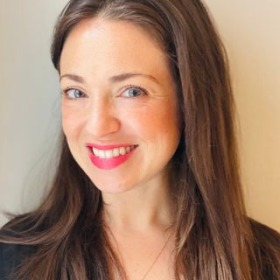
(Art History) — Some might think that my choice to go into teaching and then social work is unrelated to my art history education at Grinnell but, luckily, I know otherwise. My days spent in the cozy hub of Bucksbaum’s second floor have influenced me and my path in both simple and profound ways. It was in my art history classes that I learned to pay close attention, to find the beauty in everything, to always inquire about historical context and to question, question, question the author (or artist, as the case may be). I have used these skills of attentiveness, presence, optimism and critical thinking every single day in my work in education, counseling and social justice. After I realized in my junior year that almost every art history paper I had written thus far had addressed gender and oppression, I began to have an inkling about where I was headed once I left Iowa. With the guidance of my professors and fellow students, I was able to begin shaping my worldview. I am so thankful for the education I received at Grinnell and for the knowledge that future art historians (and even social workers!) are continuing to develop there now.
Chris Farstad ’09
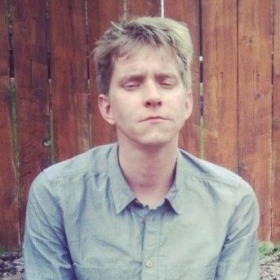
(Art History) — Art history to me was a way to access and process as much information as possible without having to produce a body of art work in addition. I was interested in music and sound as mediums, and I felt that visual disciplines didn’t have the particular focus I was looking for. Art history was a way for me to deal directly with powerful methods of thought and records of doing in order to better refine my own investigative angle and voice. I now am part of the music group Food Pyramid and am currently participating in the release of our seventh record in three years. I am grateful to be part of a group of like-minded individuals, which, I can affirm, is where all great things begin. I would encourage current art history students to explore this power of collaboration for themselves and break down disciplinary barriers as much as possible. Thinking and writing about art and culture at Grinnell and beyond has exposed me to vastly different styles, cultures, and perspectives as well as avenues of thought, being, emptiness, and excess both past and present. I have found that doing and reflecting on art are part of one continuous, unending process of realization. I would never have understood this process so thoroughly had I not washed up on the beach of art history and left the raft at the shoreline.
Liza Newman ’08
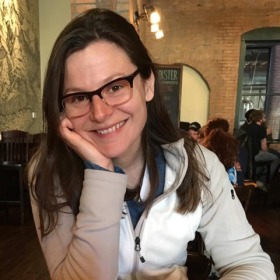
(Art History) — I declared my major in art history with a sense of adventure, and my studies have certainly delivered on that front. I went abroad to Florence my junior year, studying Renaissance art and literature with Professor Mease. As a senior, my interest in avant-gardes and performance art led me to take modern dance classes and eventually to my MAP with Professor Anger on Ardengo Soffici, a Futurist artist and art critic. I was not sure whether I wanted to go to grad school, so I spent the year after graduation teaching English in France. In 2011, I got my master’s in art history from the University in Pennsylvania, with a thesis on Picasso’s illustrations for Balzac’s “The Unknown Masterpiece.” My formal training in art history ended there, but the critical thinking and writing skills I developed at Grinnell are foundational to my current work in law. My Grinnell education, particularly the writing intensive courses offered by Professor Anger and Professor M. Cummins, more than prepared me for the rigors of law school. I am now an attorney in my hometown of Cincinnati, where I represent plaintiffs alleging employment discrimination on the basis of race, age, disability, gender, and other protected classes. Just like in college, my days are (happily!) filled with research and writing. It is an honor to work within Grinnell’s tradition of social justice as an advocate for working people.
Julia McHugh ’07
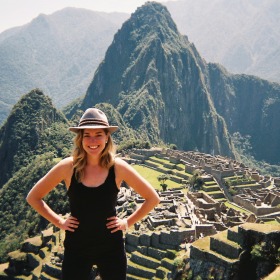
(Art History) — Julia K. McHugh is the Trent A. Carmichael Curator of Academic Initiatives at the Nasher Museum of Art at Duke University. In this position, she develops exhibitions and interdisciplinary collaborations with Duke faculty, students, and staff at the Nasher Museum of Art. She also serves as adjunct assistant professor of art history and directs the Museum Theory and Practice concentration. McHugh specializes in ancient and colonial Latin American art and earned her PhD in art history from the University of California, Los Angeles. Prior to the Nasher, she was the Douglass Foundation Fellow in American Art at The Metropolitan Museum of Art and a research assistant at the Getty Research Institute, where she assisted with the production of Golden Kingdoms: Luxury and Legacy in the Ancient Americas, a major exhibition of Pre-Columbian art. She has also held positions in the curatorial and education departments of the Los Angeles County Museum of Art and the Fine Arts Museums of San Francisco. She received a Fulbright-Hays grant to do research in Lima and Cusco, Peru, and has twice received Foreign Language and Area Studies Fellowships to pursue the study of the Quechua language.
Nicole (Niki) Reiner ’07
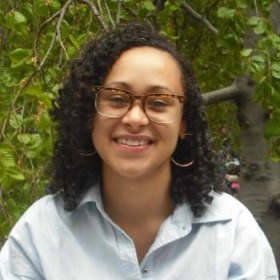
(Art History) — Greetings from New York! I am grateful to Susan Strauber for encouraging me in my decision to major in art history at Grinnell, which in turn influenced my whole academic and professional trajectory. After graduation, I returned to my home city of New York and completed several unpaid internships in art museums, one of which led to a full-time position as assistant manager of visitor services at PS1 Contemporary Art Center. After a couple of years, I returned to school and completed an master’s in museum studies at NYU, with a focus on the history and theory of museums. This August, I presented my thesis research on the emergence of ethnically-specific museums at the Smithsonian at the Fifth International Conference on the Inclusive Museum in Barbados, where I was honored with a Graduate Scholar Award for my paper entitled, “Melting Pot on the Mall? Race, Identity, and the National Museum Complex.” Presently, I work as a prospect researcher for development at the Museum of Modern Art, marking a return to my fine art roots. This March, I will marry the love of my life, Jonathan Patkowski ’09, whom I met in Tim Chasson’s Exhibition Seminar on Piranesi. Suffice to say, my time in the art history department at Grinnell was formative, and I look forward to returning for a long awaited visit in May.
Fredo Rivera ’06
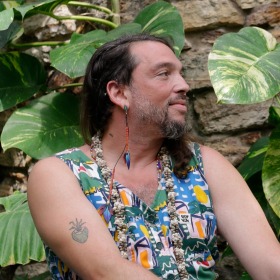
(Art History and Africana Studies) — As a student at Grinnell I pursued research foundational to my teaching and research today, as a faculty member in the department. I arrived at Grinnell with two years of art history under my belt, thanks to the design-focused high school I attended in Miami. My liberal arts education provided the opportunity to explore a broad range of art historical topics through coursework and independent study. Guided readings with Jenny Anger on Caribbean Art and African American Art & Visual Culture provided an important base for my graduate studies and are now courses offered within the department. My most cherished experiences at Grinnell were those that allowed me to work directly with art objects. The museum and the Print & Drawing Study Room remain my favorite teaching spaces on campus, as they provide the opportunity for folks to engage directly with visual art. I cherish these places where we get to think critically about the role of art in society, and that I get to share such endeavors with new generations of Grinnellians.
Katherine Rochester ’06

(Art History and French) — If going to the middle of Iowa to pursue a curatorial career might have been a gamble, it surely never felt like one. Grinnell’s intimate size and setting meant that I could instantly connect not only with professors who would shape my intellectual life, but also with museum professionals working at Faulconer Gallery. The ability to both study and play a significant role in exhibition-making while at Grinnell proved essential when I later landed positions at the Walker Art Center and The Soap Factory in Minneapolis. By the time I graduated, I had been a curatorial assistant on a major William Kentridge exhibition, conducted archival research with Professor Jenny Anger through a mentored advanced project, and co-authored a catalogue essay for Professor Strauber’s Exhibition Seminar on Goya’s Disasters of War. In my current work as a doctoral candidate at Bryn Mawr College, a curator, and an art critic, I constantly cross paths with my fellow Grinnellians. Whether they’re working in galleries in Chelsea, making art in Bushwick, or working on their dissertations in Paris, Grinnellians working in the arts are everywhere — and they’re always in just the right places.
Patrick Waldo ’06
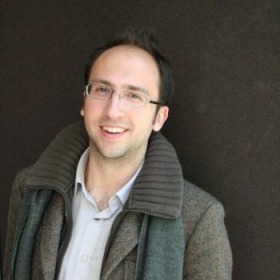
(Art History) — I knew I wanted to study art history when I arrived at Grinnell. I remember going on a tour with Alice Anderson ’04 as a prospective student and being deeply impressed by the College’s collection, the Exhibition Seminar, the Faulconer Gallery, and the ability to pursue mentored advanced projects (MAPs) or a thesis. I recognized and appreciated the fact that art history was challenging not because we had to memorize facts, such as artists, genres, and dates, but because of the rigorous analysis, both theoretical and historical. Honestly, I cannot imagine my life without the wonderful experiences of studying art history at Grinnell. I did an internship in Prague at the National Gallery’s Sternberg Palace. The next summer I returned with a stipend for my MAP on Alfons Mucha and Czech identity. I studied abroad in Florence and wrote my honors thesis on Arte Povera with Jenny Anger. After college, I lived in Italy for five years and took up a telecommuting job in programming and enterprise system building. Without formal training in IT, art history distinguished me in my job because I could think critically, visually, and innovatively. I have three patents pending out of that work. Finally, I combined my experiences in management and the arts through a double master’s program between Carnegie Mellon University (arts management) and the University of Bologna (innovation and organization of culture and the arts). Art history enriched my life personally and professionally, and I look forward to building my career from it.
Elizabeth Ferrell ’03
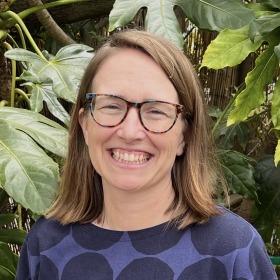
(Art History) — Elizabeth developed a passion for art history, especially the intersection of art and community, at Grinnell. Her undergraduate thesis, “The Persona of Los Angeles Pop Artists in the 1960s: Negotiating Cultural Conflict with Business Cards, Tuxedos, and Motorcycles,” which she wrote under the direction of Professor Jenny Anger, won the Phi Beta Kappa, Beta of Iowa, Scholar’s Award in 2003. She continued studying modern and contemporary art at the University of California Berkeley, where she received her PhD in the History of Art in 2012 under the direction of Professor Anne M. Wagner.
In 2022, Yale University press published her book, About The Rose: Creation and Community in Jay DeFeo’s Circle. It examines the artistic exchange inspired by The Rose, the monumental painting that San Francisco artist Jay DeFeo (1929–1989) worked on almost exclusively from 1958 to 1966. The book explores the film, photography, painting, and poetry created by Wallace Berman, Bruce Conner, Wally Hedrick, and Michael McClure in dialogue with The Rose.
Elizabeth’s publications about postwar art in the United States also include essays in the journals Kunstlicht (2012) and Art History (2017), and in the volumes Art After Conceptual Art (2006) and William Blake and the Age of Aquarius (2017). Her research has been supported by fellowships from the Henry Luce Foundation/American Council of Learned Societies, the Georgia O’Keeffe Museum Research Center, and the Crystal Bridges Museum of American Art.
She held faculty positions at Miami University of Ohio and Arcadia University, teaching a wide-range of undergraduate courses on art since the eighteenth century. She became associate professor of art history at Arcadia University in 2021. Since 2023, she has taken a break from art history to focus on parenting.
Elizabeth currently lives in Santa Monica, California with her husband and son.”
Mordecai Scheckter ’03
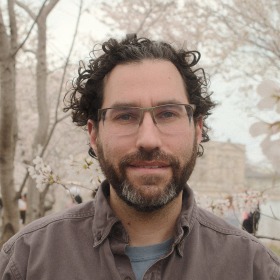
(Art History) — I have been practicing architecture in Chicago since 2008, and since 2011 as a member of Ross Barney Architects, a studio here that focuses on design for the public realm. I have been fortunate to see a great variety of projects develop from early conceptual design through construction including CTA stations, an R&D laboratory for NASA, and the Chicago Riverwalk.
I find myself referencing my liberal arts background frequently enough that it may be getting tedious for my colleagues to hear, but I sincerely think this foundation has been hugely advantageous to my post-graduate education and career. The subject matter of most of my art history coursework at Grinnell focused on modernism and postmodernism, and many of the ideas and literature connected strongly to architecture, a growing interest of mine at the time. I entered the Illinois Institute of Technology’s three-year “M.Arch.” program with this history and theory affinity, but as I progressed found that some of the technical and practical challenges were equally exciting to me. Architecture is often said to be a field for “generalists,” responsible for a wide range of expertise that must be synthesized and coordinated to solve spatial problems. I think this is mostly true; the necessary technical knowledge grows with experience, but it is the ability to make informed observations, analyze them critically, and clearly communicate ideas that feels most important in this profession, and these are skills that I really developed in the art history classroom at Grinnell, particularly in Professor Anger’s seminars.
Carrie Robbins ’02
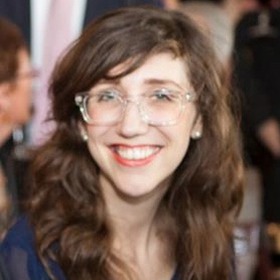
(Art History) — Was it the whirr of the projector or the drawn blinds in the classroom on a sunny day that guided my art history major? No, it was looking at pictures and letting them look back at me. It was guessing, through research and comparison at what these images might mean, knowing that my guesses wouldn’t be “right,” but that they might be suggestive or illuminating. I’ve been looking and guessing ever since. At Grinnell, I received professional training for work in the arts through a summer internship and week-long externship at a New York City gallery and art fair, through work in the Print and Drawing Study Room, and through curatorial participation in an Exhibition Seminar. These experiences helped me get hired in the Minneapolis arts scene, right out of school at the Walker Art Center, and then at Northern Clay Center as its exhibitions manager. But more than this, my art history major taught me to look carefully, to think critically, to consider things from multiple points of view, to disagree artfully with my peers, and to choose language carefully. Art history at Grinnell gave me the skills for a lifetime of learning, and beyond this prepared me for my eventual return to graduate school in the subject. Now in my final year of the doctoral program in history of art at Bryn Mawr College, I may not know what the discipline has in store for me next year, but I do know that I’ll keep looking at pictures and guessing about what they mean.
Emily Stamey ’01
Jennifer Stob ’00
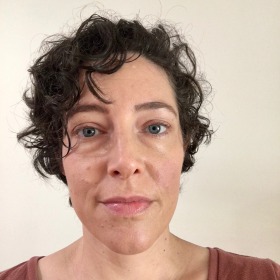
(Art History and French) — After a seminal experience in the Exhibition Seminar I took with Jenny Anger during my senior year at Grinnell, I knew I wanted to spend the rest of my life thinking about and discussing images. I spent three years living and working in Paris and Berlin, then entered Yale University’s graduate program in art history in 2003. I received my dual Ph.D degree from Yale in Art History and Film Studies in 2011. I research the ways that social space is displayed or denied in experimental film, media art, and transnational cinema.
My work has appeared in journals such as Film Criticism, Philosophy of Photography, Studies in French Cinema and Texte zur Kunst. I’ve contributed chapters to a number of edited volumes, including The Sustainable Legacy of Agnès Varda: Feminist Practice and Pedagogy (2022), On Women’s Films: Across Worlds and Generations (2019), Architectures of Revolt: The Cinematic City Circa 1968 (2018), and European Cinema after the Wall: Screening East-West Mobility (2013). I’m excited for the publication at long last of my book, The Situationist International and the Social Space of Film: With and Against Cinema with Amsterdam University Press/Routledge in 2026.
I co-program Austin’s Experimental Response Cinema. I am an associate professor in the School of Art and Design at Texas State University.
In my teaching and writing, I always have in mind artist Jeff Wall’s aphorism, reversed: “art isn’t for everyone, but it is for anyone.”
Elizabeth Perrill ’99
(Art History and Gender and Women’s Studies) — Prior to a study abroad in Zimbabwe, I took an African art and curatorial studies course with visiting lecturer, Victoria Rovine ’86. My classroom experiences, museum practica with the Grinnell College Museum of Art, and time in Southern Africa at Grinnell cemented my career path. I returned from Zimbabwe, applied to twelve internships and only received only one offer — as the sole curatorial intern in the Department of Africa, the South Pacific, and the Americas at the Metropolitan Museum of Art. This experience was a springboard to my pursute of an MA and PhD at Indiana University, and I landed a tenure-track position at the University of North Carolina at Greensboro, where I am today.
As the Smart-Tillman Distinguished Professor, named after JoAnne Smart and Bettye Tillman, UNC Greensboro’s first two Black graduates, I seek to continue the legacy of social justice that is a part of Grinnell College’s legacy. I have published two monographs, but also pursue public-facing research through curation. For five years as the African Art Consulting Curator for African Art at the North Carolina Museum of Art (NCMA), I worked with a team that doubled the gallery space dedicated to African art, and I advocated for a full-time curatorship — a post that the NCMA has maintained since 2019. I am dedicated to multi-vocal curatorial practices, and in 2024, alongside South African scholar Muziwandile Gigaba and two Museum of International Folk Art Museum curators, we launched iNgqikithi yokuPhica / Weaving Meanings: Telephone Wire Art from South Africa.
Grinnell truly set me on my path, and I embrace the love of learning that continues to be a part of every new chapter of my career.
Amy Miller ’93
(Art History) — I took art history as a freshman on a lark and utterly fell in love with the realization that I was absorbing history, sociology, religious studies, gender studies, and more, all while looking at pretty pictures. Professor Timothy Chasson was my first instructor, and I became an art history major without a second thought. By my junior year and following a stint of studying abroad at Grinnell in London, though, I realized I didn’t have the chops to go on to graduate school in art. I chose law school instead, and now I’m a nonprofit lawyer. I spent twenty years working on civil rights at the American Civil Liberties Union, and since 2020 I have been an attorney for Disability Rights Nebraska. The focus of my current position is visiting congregate residential facilities such as group homes, assisted living facilities, psychiatric wards, homeless shelters, and prisons to identify abuse or neglect of people with disabilities. Nonprofit lawyering is such a dream: I can help people without charging them, I can work on individual cases while identifying macro level reforms necessary to prevent future harms, and it’s all mostly done in casual clothes rather than a suffocating business suit. Over the decades, I’ve had the joy of hosting a pre-law Grinnell intern many times and it’s thrilling to see their ongoing accomplishments. Whether I’m in the field, in the courtroom, or in the legislature doing lobbying for new laws, the analysis and reasoning I learned at Grinnell are in my back pocket. The art history degree may primarily be the underpinning to my intellectual curiosity in the world around me rather than directly connected to my day to day life, but I would do it all again in a heartbeat.
Normandy Madden ’91
(Art History and Political Science) — Art was a major source of media during the last few thousand years, before TV, magazines, and the internet came along. It was used to communicate political aspirations, military conquests, the plight of the weak and poor, gender relationships. In addition, art produced in each historical period was a mirror into what was happening politically and socially during that time, both on the canvas, literally, and off. Looking at art through the ages can also be seen as an investigation of our world’s political history, and that was the point of my studies. I did not directly pursue art history after graduation. Instead, I pursued a career in journalism. I started out as an art/culture writer and gradually moved into business writing, but I quickly found a niche in covering advertising and marketing. If you squint closely enough, every now and then, an ad or campaign comes along that would qualify as art, at least for me. I spent five years in Prague working for newspapers like the Prague Business Journal, and today I am the senior vice president, content development, Asia-Pacific, for the Thoughtful Media Group ).
Victoria Rovine ’86
(Art History) — I became an art history major somewhere in the middle of my four years at Grinnell, after trying out a couple of other majors — I think I was a French major for a time, and perhaps a history major as well (it’s all a blur now!). But when I took an art history course for the first time, I knew I’d found my calling. I think it was a medieval art course with Chasson. I loved the art, which was all very new to me, but more than that I found that this was a field that could combine history, anthropology, literature, and all the other disciplines that interested me. To understand works of art, all of these fields were relevant. And the more art history courses I took, the more I fell in love with art from just about every place and era I studied. I went on to a career in museums (the Field Museum, the Brooklyn Museum, and the University of Iowa Museum of Art) and now a teaching position at the University of Florida, where I am an Associate Professor with a joint appointment in Art History and the Center for African Studies. I became an Africanist art historian, though I never studied Africa at Grinnell. But Grinnell led me to my passion for the study of art, so being an art history major was certainly a formative experience for me.