
Abstract Expressionists: The Women Comes to Grinnell
Exhibition focuses on the women of a landmark American art movement
Tim Schmitt
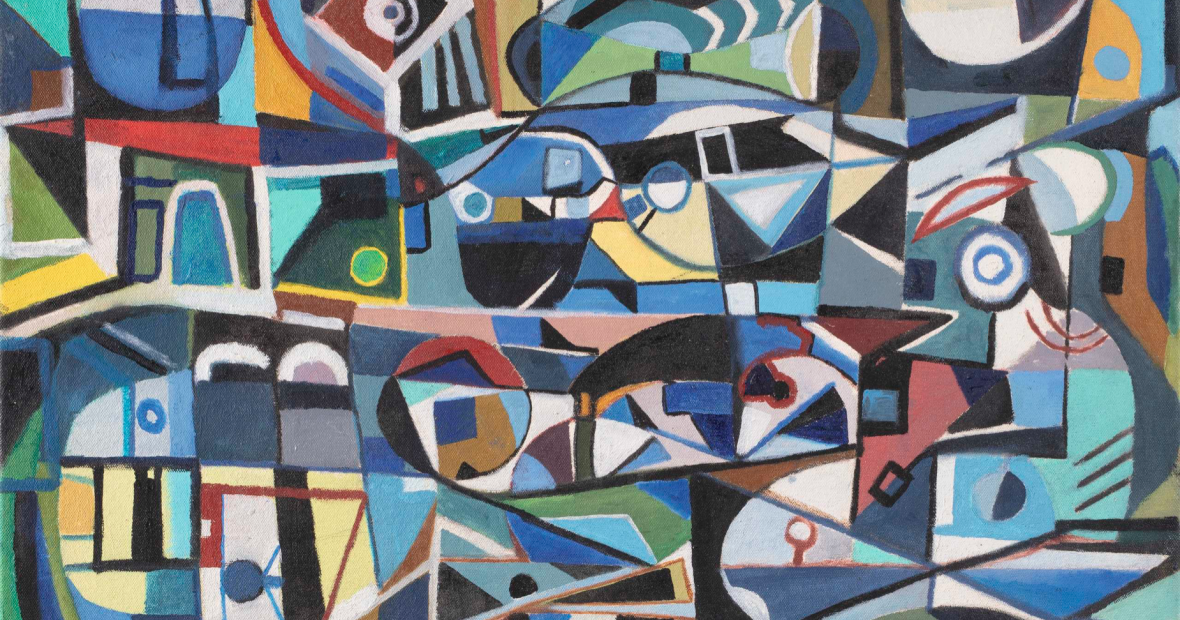
When Abstract Expressionists: The Women opens at the Grinnell College Museum of Art (GCMoA) on Sept. 17, visitors will have an opportunity to encounter an important chapter of American art history through the work of women artists whose contributions have often been overshadowed.
The exhibition, organized by the American Federation of Arts and curated by art historian Ellen G.
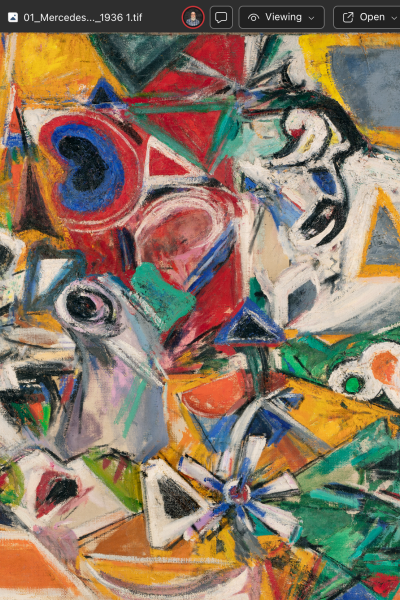
Landau, features nearly 50 paintings by 32 women artists from the Christian Levett Collection and FAMM (Female Artists of the Mougins Museum) in France. The works span 1936 to 1977 and include artists such as Lee Krasner, Elaine de Kooning, Grace Hartigan, Helen Frankenthaler, Joan Mitchell, Sonja Sekula, and others.
Susan Baley, director of GCMoA, says the exhibition is significant both for its subject and for the opportunity it provides to reconsider a familiar story.
“It’s just a great opportunity for you to see a side of this style that, for many decades, emphasized the male contributions to abstract expressionism. Now you get to see that women artists were also making very significant contributions to this movement as well,” Baley said.
Reframing a movement
Abstract Expressionism is often associated with the postwar New York art world and figures such as Jackson Pollock, Willem de Kooning, and Mark Rothko. But Abstract Expressionists: The Women broadens that narrative, highlighting women artists who were working alongside — and often pushing beyond — their better-known male contemporaries.
The exhibition also examines the movement’s geographic reach, including artists working in New York, California, and Paris. The accompanying exhibition materials describe how women artists experimented with spontaneity, gesture, scale, and process, helping expand what Abstract Expressionist painting could be.
“It was really the first American art style that gained international acclaim,” she said. “So it was kind of the first time that American artists were considered to be innovators and leading this international art scene rather than following the European art scene.”
The movement also became associated with American freedom during the Cold War, a connection that gives the exhibition particular resonance as the College marks the 250th anniversary of the United States.
“In many ways, this is our celebration of the 250th, a little non-traditional way to celebrate it, but really thinking about American art as this symbol of freedom of expression,” Baley said.
A special connection to Iowa
Among the exhibition’s most important artists is Lee Krasner, whose work has sometimes been discussed primarily in relation to her husband, Pollock. Baley sees Krasner as essential to understanding the movement on her own terms.
“She was arguably just as important of an artist as Pollock was, but he got the attention,” Baley said. “In many ways, Krasner put her career second in order to promote her husband’s work. He would not have been the famous artist that he became without her efforts because she was much better at that than he was.”
Because the Krasner painting originally included in the traveling exhibition is currently part of a Krasner retrospective in New York, the American Federation of Arts arranged for one of Krasner’s works from the Des Moines Art Center to be shown at Grinnell instead.
“It would have been a shame to have had an exhibition about women abstract expressionist artists without her because she really is a seminal figure,” Baley said. “We're thankful to our friends in Des Moines for making that possible.”
Bringing the exhibition into the classroom
The exhibition is also designed to become part of the academic life of the College. Baley said more than 35 class visits were already scheduled, with additional visits planned in the Print and Drawing Study Room.
Professor Jenny Anger has incorporated the exhibition into one of her classes, while Landau will visit campus on Oct. 27 to give a public talk and meet with students. Contemporary artist Carrie Moyer, whose work is represented in the College’s collection, will visit in November to discuss her abstract work and its relationship to Abstract Expressionism.
“These are going to be great opportunities for those students to get to talk to her directly,” Baley said of the curator’s visit.
The museum also will launch its first digital guide through Bloomberg Connects, giving visitors access to additional information about selected exhibition works and pieces from the College’s collection through QR codes and a mobile app.
Abstract Expressionists: The Women opens Sept. 17 with remarks by American Federation of Arts curator Catherine Wright. The exhibit will be on view through Jan. 2, 2027.
Abstract Expressionists: The Women is organized by the American Federation of Arts from the Christian Levett Collection and FAMM (Female Artists of the Mougins Museum), France. The exhibition is generously supported by Berry Campbell Gallery, Betsy Shack Barbanell, Monique Schoen Warshaw, and Clare McKeon and the Clare McKeon Charitable Trust. Additional support has been provided by the Pollock-Krasner Foundation and the Every Page Foundation. Bloomberg Connects digital experience is made possible through the support of Bloomberg Philanthropies. The presentation at GCMoA is made possible by Timothy O. Benson ’72 and Susan E. Annett ’74; and Karen and Stephen Clark, parents of John Clark ’19.