
Grinnell Representatives Join National Conversation on the Future of STEM Research
Susan Ferrari and Kristen Burson will represent Grinnell at a National Academies summit focused on strengthening STEM research at emerging research institutions.
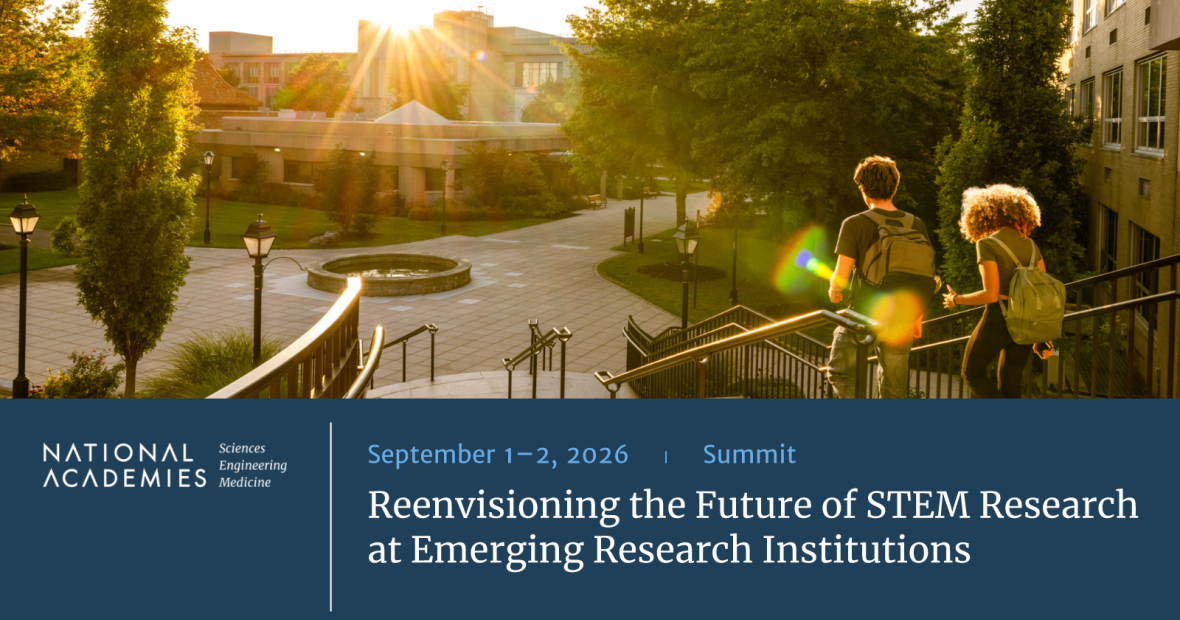

Susan Ferrari, assistant vice president in the Office of Grants and Research and Kristen Burson, associate professor of physics, will bring a liberal arts perspective to a national conversation about the future of STEM research at emerging research institutions (ERIs)--colleges and universities with less than $50 million in annual federal research expenditures. During the National Academies of Sciences, Engineering, and Medicine’s Reenvisioning the Future of STEM Research at Emerging Research Institutions summit, Sept. 1–2 in Washington, D.C. Supported by the National Science Foundation, the event will explore the role ERIs play in the U.S. scientific landscape and how the nation can better support and draw upon their expertise.
Ferrari was selected to serve on the nine-member committee convened for the workshop and is the only committee member representing a liberal arts college. The committee has coordinated three webinars leading up to the summit, examining how ERIs contribute to research, education, and workforce development. She will moderate a panel focused on disrupting myths around STEM research, education and workforce development at ERIs.
Ferrari shared, “‘Emerging research institution’” is an incredibly broad category, encompassing institutions ranging from community colleges and baccalaureate colleges like Grinnell to regional comprehensive and doctoral institutions,” said Ferrari. “I’ve seen my role on the committee as ensuring that the perspectives, needs, and strengths of undergraduate institutions are not overlooked—including our outsized contributions to the scientific pipeline, the significant research undertaken by our faculty and students, and the value we contribute to the federal agencies, foundations, and corporations that partner with us.”

Burson was selected to participate in a panel highlighting faculty and student research at emerging research institutions. Sharing “My panel will highlight stories from researchers at ERIs. Often teacher-scholars at institutions like Grinnell are using creative and thoughtful research models that both fuel scientific discovery and disproportionately contribute to developing the next generation of scientists. I'll be joined by a recent alum from my research group to highlight how fruitful collaborations with national labs and robust mentoring for student-scholars drives my scholarly productivity and leads to amazing student outcomes."
Interested in Attending?
The summit is free to attend virtually. The registration link is here: https://events.nationalacademies.org/46853
About National Academies
The National Academies provide independent, trustworthy advice and facilitate solutions to complex challenges by mobilizing expertise, practice, and knowledge in science, engineering, and medicine. We envision a nation and world that rely on scientific evidence to make decisions that benefit humanity. At the core of our work is an unwavering commitment to objectivity, scientific rigor, and truth.
The National Academies of Sciences, Engineering, and Medicine operate under a congressional charter signed by President Abraham Lincoln in 1863, at the height of the Civil War, to advise the nation on issues related to science and technology. The legacy continues to this day, as the National Academies work together to address the most pressing challenges facing our nation and the world. The work of our private, nonprofit institution is grounded in the expertise of the membership elected to our three Academies and conducted through our major program centers and offices.