
Grinnell Women Working to Power Positive Change
How four Grinnell alums are blazing new trails in the finance world
Anne Stein ’84

In the high-stakes, innovation-driven world of venture capital (VC) and private investing, a cohort of Grinnell women graduates are bringing new perspectives across the spectrums of business and finance. Their work around the globe is changing practices in fields from startups and AI to institutional investing and global intelligence.
From Shanghai and San Francisco to Chicago and Boston, these alumnae represent an exciting and untold story: how business leaders with a liberal arts education foundation — paired with curiosity, drive, and a desire for positive change for the common good — are powering new models of investment, research, and entrepreneurial vision.
Maggie Bian
Partner and Chief Operating Officer of HOPU Investments, COO at Arm China
Shanghai, China

She’s often both the only woman in the boardroom and one of the youngest at the table. Fifteen years into her career, Maggie Bian ’09 is a partner and chief operating officer at HOPU Investments, one of Asia’s largest private equity firms.
Based in Shanghai, her duties focus on people rather than numbers. She oversees human resources, investor relations, portfolio management, public relations, facility management, and technology.
She’s also COO at Arm China, a joint venture between Arm Global (the world’s leading intellectual property company) and investors led by HOPU Investments, overseeing business operations and building relationships with key investors and stakeholders. Bian is frequently “seconded” onto companies that HOPU invests in; it’s a temporary assignment working with CEOs of HOPU’s portfolio companies.
An independent major in economic development and East Asian history, Bian didn’t have a career in mind at Grinnell. “I’m a first-generation college student (from Shanghai) so I didn’t get a lot of college advice,” she says, though her parents were entrepreneurs and their work ethic and drive clearly influenced her. “I was always ambitious, and once I have a job in place, I ask how I can make the most out of it.”
Following graduation, she earned a master’s in regional East Asian studies at Harvard University, figuring she’d return to Asia and work. A summer internship with several U.S.-based NGOs, including the Nature Conservancy, changed her mind, and she hoped that staying in the U.S. and working for a nonprofit would be her path.
Unfortunately, her visa status wouldn’t allow it, but a Harvard recruiting event yielded several job offers, including one from investment firm Sanford Bernstein in Hong Kong.
“My first job was very foundational, as an equity research associate,” Bian says. “I read financial statements and wrote reports, which is important training.” But she didn’t particularly enjoy it. Bian asked for more work in other areas throughout the company. She worked 12 hours a day, seven days a week for the first five years of her career, learning and doing whatever she could.
“I started my career on the investment side — most people think that’s the fancier side, the main job of VC, formulating investment strategy and doing deals, but I quickly realized it wasn’t my passion. So I switched my focus, getting into a sales role three years into the job, which pivoted me more to the people side,” she explains.
After four years she moved on to Hillhouse Capital, one of the largest asset managers in Asia. She started as chief talent officer and eventually became executive director, primarily responsible for portfolio management, human resources, and investor relations. She went on to the managing director's position at YF Capital before moving on to HOPU, where she has worked for the past two years.
“My experience has been learning while doing, then reflecting on what can be done better — and having good support people,” says Bian. “I sort through hundreds of things daily and indecisiveness isn’t helpful, so early on I decided I’d make decisions to start the ball rolling.”
“I always tell people that my role in the private sector is a place where you can make a difference,” she says, citing Hillhouse Capital’s landmark investment in BeiGene, a biotech company that’s developed effective and low-cost oncology drugs.
“You are investing money in companies that are changing the world, and you’re supporting entrepreneurs to pursue their dreams.”
Andrea Brennen
Senior Vice President of Applied Research, IQT (In-Q-Tel)
Boston, Massachusetts
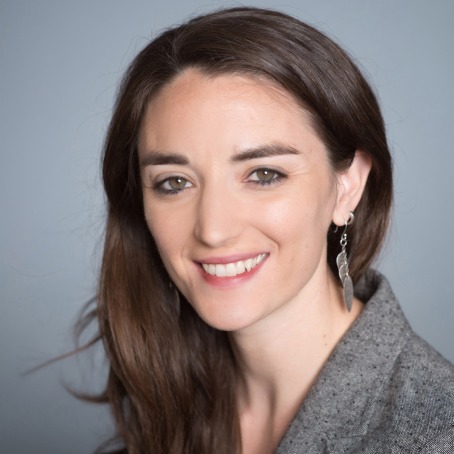
Andrea Brennen ’04 didn’t have an iota of interest in finance or venture capital during her college career. “I was just trying to get the most out of Grinnell,” says Brennen.
With a double major in mathematics and studio art, Brennen particularly enjoyed sculpting and theoretical math. She put the two together, thinking architecture would be a great career, and earned a Master of Architecture in Architectural Design from the Massachusetts Institute of Technology in 2009. It turned out that studying architecture was more appealing than practicing it for Brennen. She also graduated from MIT when few companies were hiring.
Brennen traveled and worked overseas for a year, then returned home. She eventually started her own small design consulting company based on her math and architecture skills and started getting contracts. Then she joined the technical staff at MIT’s Lincoln Laboratory, where she worked for four years.
“I did a lot of work at MIT’s Media Lab, and I noticed that startup companies spinning out of MIT were building what we’d now call data science tools, software to basically process and analyze really large amounts of data.” But there were no designers involved in these projects.
“I thought, if you’re going to build a software product to process data and present the insights to a person who’s not a computer scientist or statistician, you have to think about how to design the data that’s represented, to have better visuals to make sense of it. It gives you a way to see, at a glance, what the big picture is.”
A few years later she was recruited by In-Q-Tel (IQT), a not-for-profit global investment firm that works with government agencies across the national security community.
Her initial job at IQT included technical vetting for startups building visualization tools. She would sit in on pitches and help the investment team get a sense of which products would work or were better than other products, for example. “A lot of that job was asking questions and thinking critically, because the company is trying to sell an idea that they want you to invest in. It was a good use of my liberal arts background.”
Now a seasoned technical expert in visual analysis and human-AI interaction, she manages her company’s applied research team, working with computer science, AI, and security experts.
“My path is the most accidental and random way into venture capital,” says Brennen, now in her 11th year at IQT.
Today, she says, “I sit in this unique position where I talk to startup companies and constantly learn about new technologies. And I talk to people within the government to understand what they are doing and what are their challenges.”
“I find the work really rewarding,” says Brennen. “It’s fascinating to have a front-row seat to what’s going on in these two very different worlds. There’s so much innovation in the venture ecosystem, and it’s an amazing mechanism for funding cutting-edge research.”
Saule Keliauskaite
Investment Associate, UCSF Foundation Investment Company
San Francisco, California

If there’s an investment specialist who has been thoroughly trained in her field by Grinnell, it’s Saule Keliauskaite ’23.
“When I came to Grinnell, the world opened up,” says the Vilnius, Lithuania, native. “I could do economics, take my math classes and computer science, but I could also study art history and get a better understanding of Greek literature.”
She joined the campus investment club, Pioneer Capital Investments, her first year. “I didn’t have much background in investing, but I found a community that wanted to understand companies, business owners, and entrepreneurs.”
At UCSF Foundation Investment Company, Keliauskaite has helped manage the endowment across public and private markets since 2025. She says her most important role is executing due diligence and evaluation of managers and opportunities. “I believe that while data is essential, the primary driver of success is the resilience and conviction of the people involved.”
Prior to UCSF, she was an endowment investment analyst for the Grinnell College Investment Office in Boston. “Moving to UCSF felt like a natural progression, allowing me to apply a mission-driven model to a larger institutional scale.”
“I trace my interest in finance back to the campus investment club and learning about people like (Berkshire Hathaway’s) Warren Buffett and Charlie Munger and finding other people who were interested in learning together,” she says. The group analyzed companies and discussed why they’d be good investments, but her favorite part of the presentations focused on behavioral economics.
“Let’s say you see a lot of people in VC trying to get in on a hot deal. You need to ask, why is it happening and then, are you participating because you’re fearful of missing out, or is it actually a good opportunity? It can be about not doing what the herd mentality is doing.”
As a student, Keliauskaite had a summer internship at a Lithuanian VC firm focused on clean energy investments. She spent her third year studying at the London School of Economics and getting into pitch competitions.
“I met people who were creating interesting things, and they all had this conviction about their venture,” she says. “Ultimately you are investing in people who are entrepreneurs and learning what kind of hardships they go through, their thinking, the teams they assemble, and the people they’re trying to convince to go on this journey with them.”
Later, Keliauskaite and other investment club members traveled to a Harvard investment conference, where they met the Grinnell endowment team. Those connections led to her first job.
“I learned so much working with them. As a student, you have a lot of academic exposure but it’s not the same as being in the room and learning from people doing some of the best work in the world. I don’t even have the words to express how formative that was, and how it put me on this path.”
Now in San Francisco, Keliauskaite says, “While my role involves managing a complex endowment, my personal ‘North Star’ is identifying top-tier talent and understanding the psychology behind high-performance teams.”
Ultimately, she says whether it be at Grinnell or UCSF, “there are institutional needs, and you want to make sure that the endowment is there forever to support that institution and its students.”
Grisel Hernandez
Senior Associate, Chingona Ventures
Chicago, Illinois

There were a number of “aha” moments that led Grisel Hernandez ’17 to the world of early-stage venture capital. A first-generation college student from Chicago, she originally wanted to delve into Spanish literature and Latin American history at Grinnell. “I really liked magical realism,” she says.
“But I was also curious about other disciplines.”
A few weeks after starting ECON 101 with Professor of Economics Bradley Graham, she decided that economics would be her major. “I was really drawn to game theory, economic development, and how economics intertwined with other disciplines.”
She also focused on political science with her advisor, Professor Emerita of Political Science Eliza Willis, and on Latin American studies with Associate Professor J. Pablo Silva.
Several experiences during her Grinnell years piqued her initial interest in how society allocates resources. “I had an internship in Chicago with a nonprofit advocating for immigrants’ housing rights and supporting social impact tourism in Mexico and Cuba.” Hernandez liked what they were working toward, but it was painful to see the organization so financially constrained.
She studied abroad for one semester at the University of Buenos Aires. “There were lots of protests due to higher education budget cuts and again I thought, ‘Who’s sitting at these decision-making tables, and what would it look like to have someone else there?’”
But she didn’t think too much about a career until after graduation. “In my first role outside of college (researching financial market data) I began to see capital allocation as one of the ways societies decide what gets built and who gets supported.”
A Grinnell connection led to an interview with a chief investment officer of an institution managing public and private market investments. “I worked with a team making investments in private market funds, and that’s where I started learning more about investing. Within that, venture was the most interesting asset class to me, and I eventually decided to join an emerging fund making early-stage investments.”
At the same time, Hernandez learned as much as she could about VC, identifying industry leaders and teaching herself the financial aspects of the role. She completed a venture fellowship with Chicago:Blend, becoming their first fellow to land a role in venture capital. She now serves on their Alumni Board and helps emerging talent land roles in the industry.
She landed a job nearly four years ago at Chicago-based Chingona Ventures, a small, female-led firm that specializes in idea-stage startups.
Hernandez also started a learning and upskilling community nearly a year ago called AI for Investors, which has almost 500 members. Once a month, they gather to share how they incorporate AI in their day-to-day work as non-technical people in a show-and-tell type style.
“I spend a lot of time thinking about how knowledge workers will be impacted by AI,” Hernandez says. She gave a talk at Chicago Tech Week last year, with predictions about how AI will change and reshape the way that we work.
“I think what I find interesting about early-stage venture is that these firms make big bets on bold ideas that can reshape everyday life. Those investment decision-makers at the earliest stage are the ones deciding which ideas and products get funded,” Hernandez says. “That really aligns with my interest of seeing how capital is allocated.”
Originally published in the Spring 2026 issue of The Grinnell Magazine.