
Preserving Haiti’s Story
Inside Grinnell’s Haitian Art Digital Crossroads Project
Tim Schmitt
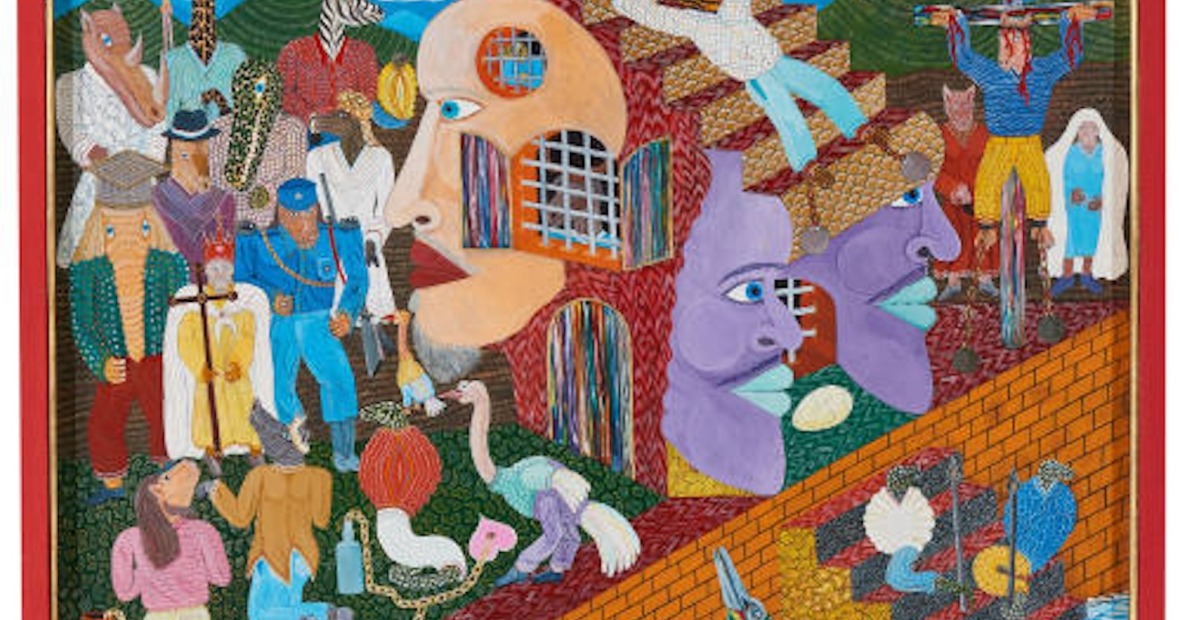
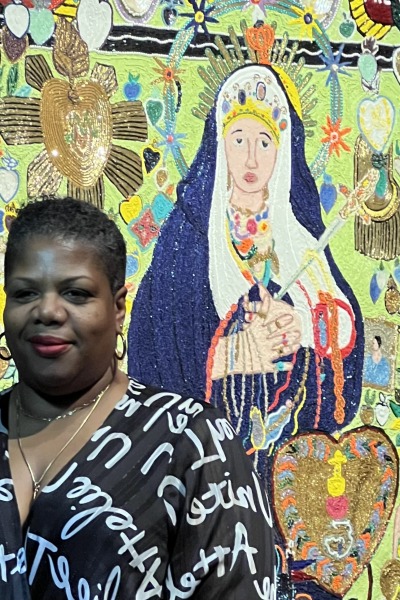
When Grinnell College partnered with the Waterloo Center for the Arts, home to the largest public collection of Haitian art outside Haiti, it opened the door to a transformative digital humanities project. Led by Assistant Professor and Cultural and Community-Based Digital Curator Petrouchka Moïse, the Haitian Art Digital Crossroads (HADC) is creating a multilingual, community-centered digital platform that rethinks how Haitian art is documented, interpreted, and shared. Supported by a major National Endowment for the Humanities grant, the project brings together students, scholars, and institutions across the globe to build one of the most comprehensive and culturally grounded digital collections of Haitian art in existence.
Moïse joined Grinnell as a CLIR/Mellon postdoctoral fellow in 2020 working with Assistant Professor of Art History Fredo Rivera ’06 to consider a new way to present the extensive Haitian collection held at the Waterloo Center for the Arts. Their vision was to create a platform that wasn’t just a digital catalog but a dynamic, multilingual space where Haitian collections could be narrated by Haitian voices — and placed in cultural, historical, and communal context.
In April 2023, that vision became possible thanks to a $350,000 grant from the National Endowment for the Humanities (NEH), supporting the digitization of more than a thousand works of Haitian art across multiple institutions.
Rooted in Haitian Philosophy
Moïse’s goal with HADC is to create a system that reshapes the global view of Haitian art and how it is perceived. To that end, the HADC highlights the intellectual, aesthetic, spiritual, and social depth of Haitian creativity.
While many digital art collections present pieces as isolated objects, HADC seeks to do the opposite. By linking collections across states, disciplines, and curatorial traditions, HADC creates a living conversation defined by connection rather than separation.
“What I’ve designed and built is a platform that allows marginalized voices to be heard in a cultural narrative,” Moïse explains.
HADC is intentionally built on Haitian cultural principles. Moïse draws on the philosophies of “lakou” — a communal courtyard where families share resources — and “kombit,” the tradition of collective labor.
“I use the principle of the lakou, and the principle of the kombit, to establish how we should proceed in decolonizing spaces, and how do we now want to look at our narratives in the digital realm?” she says.
Those values shaped the governance structure, data model, and collaborative process. In 2023, Moïse and Rivera invited 31 scholars, artists, curators, and institutional partners to Grinnell for a four-day working conference to build a shared framework for the collection’s future.
Students at the Center
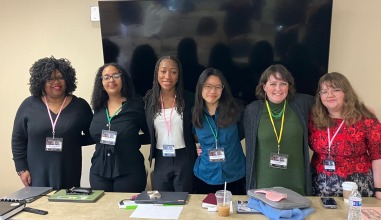
From the start, student researchers have been an instrumental component of HADC. Moïse treats the work like a fully professional operation and treats students the same way, inviting them into a collaborative space where they are not just administrative help, but partners. They have built databases and metadata schemas, researched artists and cultural terminology, performed audits, designed paths for end-user experiences, developed Haitian Kreyòl vocabulary lists, and crafted descriptive labels during weekly sessions. Those sessions often turn into conversations about the responsibility and representation of culture. “How much are we stripping out when we are only allowed 140 words on a placard?” Moïse asks as students debate phrasing, tone, and cultural nuance. This student work reaches far beyond campus as they’ve presented at professional conferences, including the Haitian Studies Association annual conference, where they spoke on “digital reparations” in the areas of curation, law, computer science, and public engagement.
Creating Partnerships
The project has deepened the College’s partnerships with organizations such as the Waterloo Center for the Arts, Milwaukee Art Museum, Centre d’Art in Haiti, and collections across the United States. And by making the material openly accessible online, HADC’s platform extends its reach to scholars, artists, and communities around the world, amplifying voices too often excluded from mainstream art history.
“This was a Herculean feat,” says Moïse. “It transforms how we accessed art in the past and how we’re going to be able to access art in the future, especially a narrative that has never been heard.”
Moïse’s vision is still expanding. She aims to grow the database from roughly 1,200 to more than 4,000 works, bringing new collaborators into the fold. A full Kreyòl translation of the platform is underway so Haitian users can navigate and interpret the site in their own language. She is also working with Georgetown Law on questions of blockchain technology, cultural sustainability, and digital ownership — exploring what ethical curation could look like in the future.
For Moïse, the project is more than a scholarly exercise, it’s a deeply personal endeavor. Working on HADC has brought “such a sense of self-discovery and healing to my own Haitian narrative,” she says. “I have been charged to be a steward of the ancestral treasures of the Haitian people’s past, present, and future.”
To explore the collection, visit the Haitian Art Digital Crossroads.