
President Main Set the Standard of Residential Life at Grinnell
A three-minute history of Grinnell College
Jackie Hartling Stolze
The spirit of community that enlivens residence life at Grinnell College continues to expand, thrive, and grow. In the last year, the first students moved into Renfrow Hall, a new apartment-style residence hall in downtown Grinnell. In addition, a renovated and modernized Loose Hall on South Campus welcomed the first students back in fall 2025.
It’s all part of a long and storied history of residential life at Grinnell, stretching all the way back to 1888 when the College opened its first dormitory, Mears Cottage.
Mears, affectionately known as “The Cottage” or “The Shack,” provided rooms for 50 young women scholars. Mears offered a cozy, homelike environment, which, in keeping with the times, College leaders considered appropriate for women.
A True Residential Campus
President John H.T. Main, who led Grinnell College from 1906–31, envisioned a true residential campus for Grinnell students. When he was inaugurated as president, most students were scattered around town, living in boardinghouses and rented rooms. The only exceptions were the 50 women living in Mears.
Main believed that creating a student community, living together on campus, was of the utmost importance.
“Our dormitories are an expression in brick and mortar of the Grinnell ideal,” Main said.
Modeled on Oxford
Grinnell has Main to thank for the strong residential system still in place at Grinnell today. With the system at Oxford University in mind, he imagined a campus where students would live in small homes that would foster the community spirit and closeness that he deemed necessary for higher education.
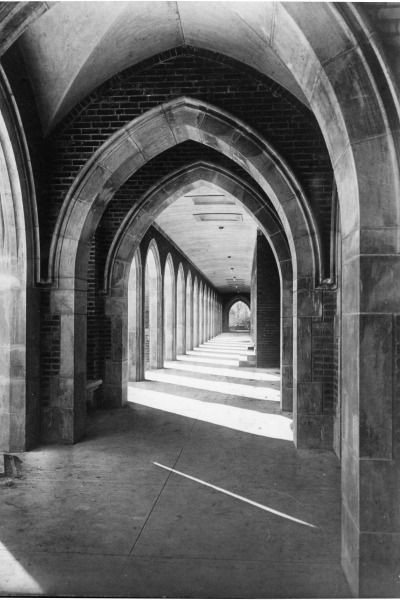
Main spoke of this dream at the dedication of Clark Hall, one of the nine North Campus residence halls that emerged from his vision for a residential campus.
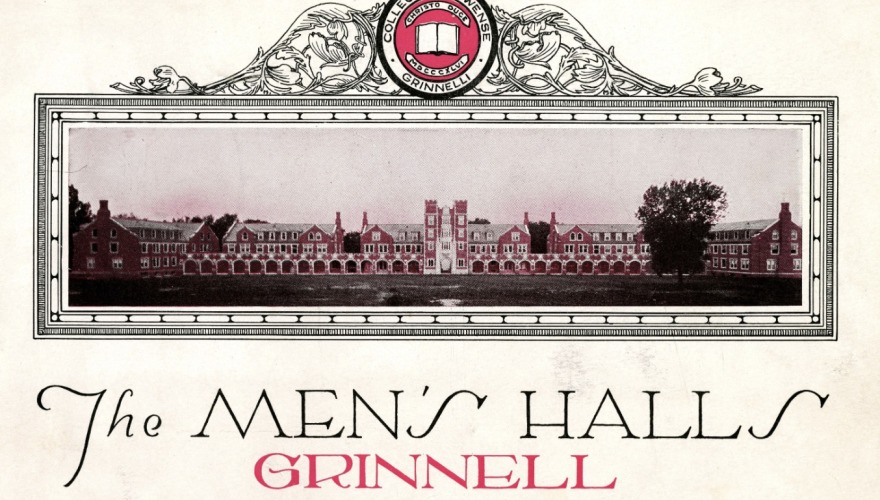
“A long time before this group of buildings was realized in brick and mortar, I dreamed about them, and fervently hoped that when they were built that each one would develop in the mind and hearts of those who were to live in it, in some degree, the spiritual ideals that we associate with home life,” Main said.
Keeping the Home Fires Burning
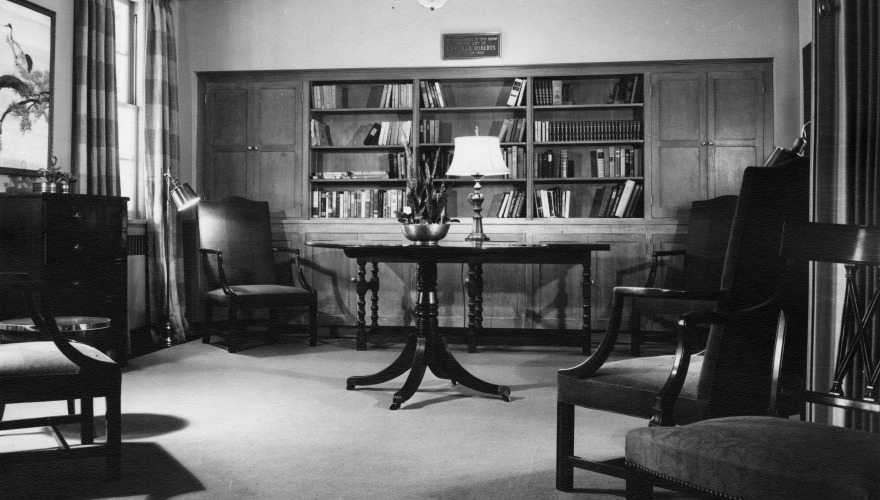
Main worked tirelessly to raise funds for his “Campaigns of Progress,” which funded the construction of North Campus for men and the Quadrangle residence halls for women (now known as South Campus).
In 1915, Grinnell College dedicated the new women’s Quadrangle, which was built at an estimated cost of $339,500. Some 100 invited guests from around country witnessed a ceremonial “lighting of the fires” at the buildings’ dedication. According to the Nov. 24, 1915, Scarlet & Black, the student newspaper, Main handed a lighted torch to Professor of Physics Fanny Gates, who was also dean of women.
“Miss Gates accepted the torch from the hands of the president, and from the blazing fire lighted six tapers, which were given to six girls, one from each cottage, to kindle the fires on the respective hearths,” the S&B reported.
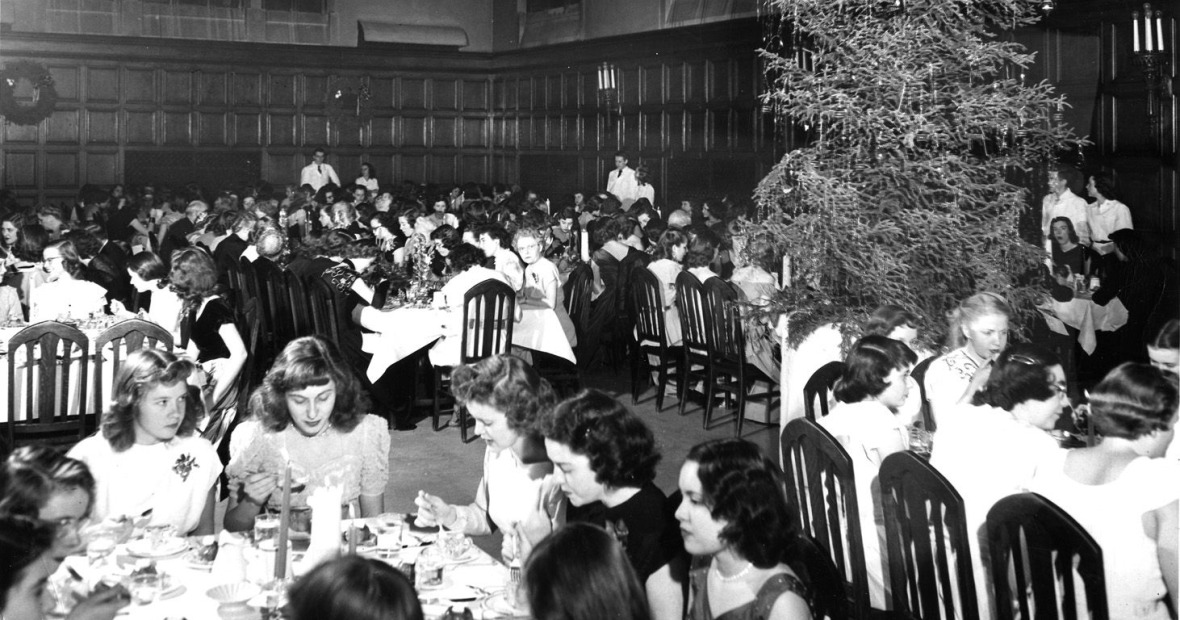
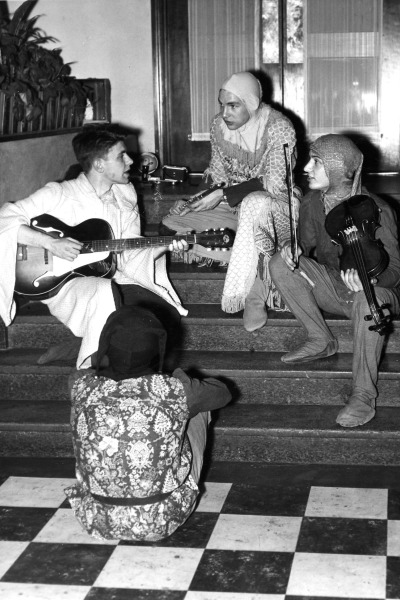
This ritual continued for decades as the “Yule Log Dinner,” held before Christmas each year in the women’s halls. The young women, all dressed in white, gathered for the lighting of the fire from the wood of the year before, symbolizing the ideals held by the former women of Grinnell.
Carrying Main’s Ideas Forward
The current expansion and renovation of the residence hall system at Grinnell reflects a College that still believes in the ideals espoused by President John Main: that residence life is at the heart of a Grinnell education.