
Grinnell Hosts Iowa Human Rights Research Conference
Students and faculty share research while building connections with scholars from across the state.
Tim Schmitt
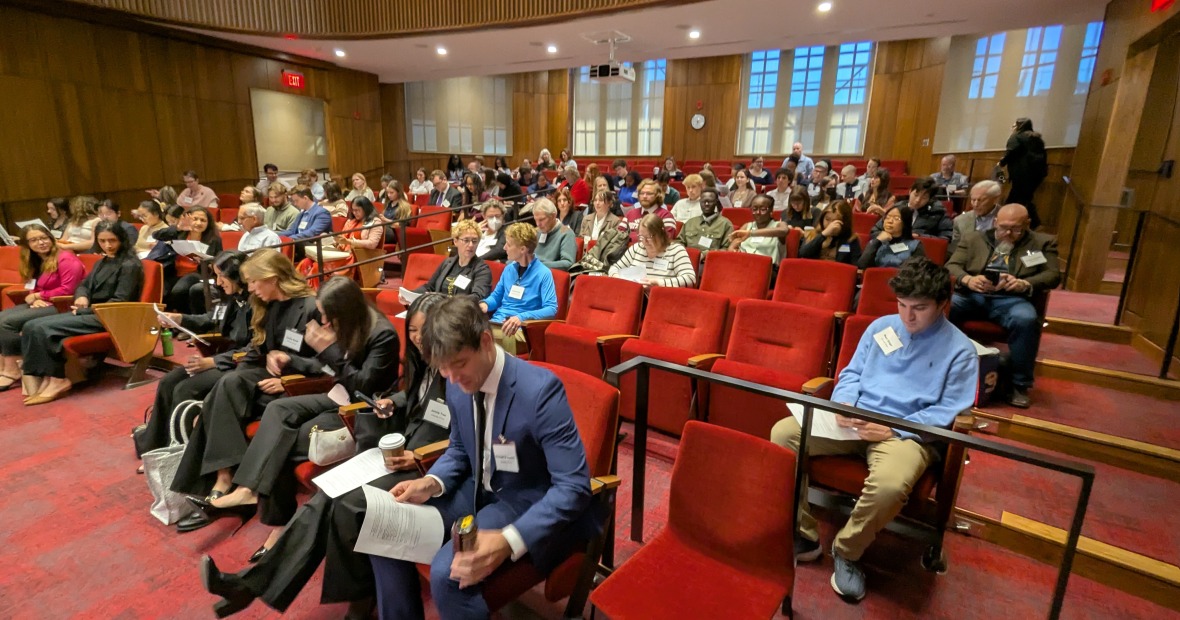
Grinnell College welcomed students, faculty, and researchers from across Iowa on April 18 for the Iowa Human Rights Research Conference, marking the first time the annual event was held on campus. Organized by the Iowa Network of Human Rights Academics with support from the University of Iowa Center for Human Rights, the conference brought together a wide range of voices to explore pressing issues in human rights through panels, discussions, and poster presentations.
Held in the Humanities and Social Studies Center, the one-day event was among the largest in the conference’s history, drawing participation from 15 institutions across the region. With 16 Grinnell students presenting and four faculty members serving as discussants, the College played a central role in shaping the day’s conversations.
Grinnell President Anne Harris also addressed the conference via video, underscoring the importance of the event and its alignment with the College’s mission to foster critical thinking, social responsibility, and global engagement. By creating a space for dialogue on issues that affect both local and global communities, the conference embodied the College’s commitment to inquiry and action.
A First for Grinnell — and a Growing Presence
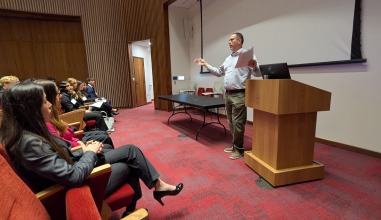
The conference rotates annually among institutions in Iowa, and bringing it to Grinnell reflected a growing effort to strengthen regional academic connections.
“It had seemed like a missed opportunity to have such a relevant conference nearby without more participation from our students and faculty,” said Jackson (Monty) Roper, associate professor of anthropology and the conference’s local coordinator. “Hosting it here raised awareness, increased involvement, and connected us more deeply to this network.”
Roper, who had previously attended the conference with students, helped organize the event on campus. Its central location made it accessible to participants traveling from across the state, contributing to the high turnout.
“This shaped up to be one of the largest conferences they’ve had in a while,” Roper said. “We even had to reserve extra rooms.”
Student Research Takes Center Stage
At its core, the conference emphasized student scholarship. Panels featured undergraduate and graduate students presenting research on topics ranging from immigration and public health to international human rights and archaeology.
For many students, the opportunity to present their work to a broader audience was both meaningful and transformative.
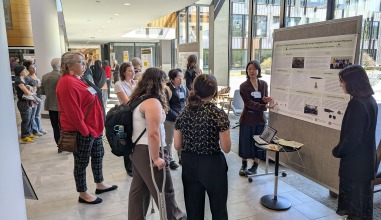
“It meant a lot to me that we were able to share our work and reflections with scholars, students, and community members from all over Iowa,” said Mahiro Noda ’26, a biological chemistry major with concentrations in neuroscience and policy studies. “With the whole conference centered around human rights, I was able to reflect on my own learning journey through that lens and reaffirm the importance of preventative healthcare access in Iowa.”
Noda, who collaborated with peers on her project, described the experience as a fitting culmination of her work at Grinnell. “As we near graduation, it felt important to end our journey by sharing our learning experience with a wider audience,” she said.
Ezra Turner ’26, an anthropology and classics double major, echoed that sense of connection and validation.
“It was nice to share what I was working on with a larger community,” Turner said. “Writing a paper for a class or a MAP [a Mentored Advanced Project] can be isolating, so the opportunity to exchange ideas with other students and scholars who care about similar issues was a real treat.”
Learning Beyond the Classroom
In addition to showcasing research, the conference provided valuable opportunities for students to develop professional skills and engage with new perspectives.
“For students, it was an opportunity to take their work to the next level by presenting it to an audience and receiving feedback,” Roper said. “It helped develop presentation skills — especially learning how to condense months of work into a 10-12 minute talk.”
Students also highlighted the value of engaging with peers from other institutions.
“I was looking forward to exploring the vast range of stories, perspectives, and experiences people brought to the discussions,” Noda said. “Those conversations offered new insights that I can carry forward into the next stage of my life and career.”
For Turner, the experience offered a glimpse into academic life beyond Grinnell. “It helped me gain tangible experience working within academia,” he said. “Attending conferences and participating in the field is a different experience than just talking about it.”
Strengthening Community and Connection
Hosting the conference also created opportunities for connection across institutions and within the Grinnell community.
“It was a chance to learn what others are working on and to engage with important issues,” Roper said. “It also helped strengthen connections between Grinnell and other colleges and universities in Iowa.”
The event was open to the public, encouraging attendance from students, faculty, and community members beyond those presenting. For many, it was a rare opportunity to engage with a wide range of human rights topics in one place. The topics discussed throughout the day — from immigration policy to healthcare access — highlighted the relevance of human rights issues within Iowa and beyond.
“It felt very meaningful that the College was able to host students and scholars from all over Iowa for these conversations,” Noda said. “I hope attendees found something that resonated or offered new perspectives.”