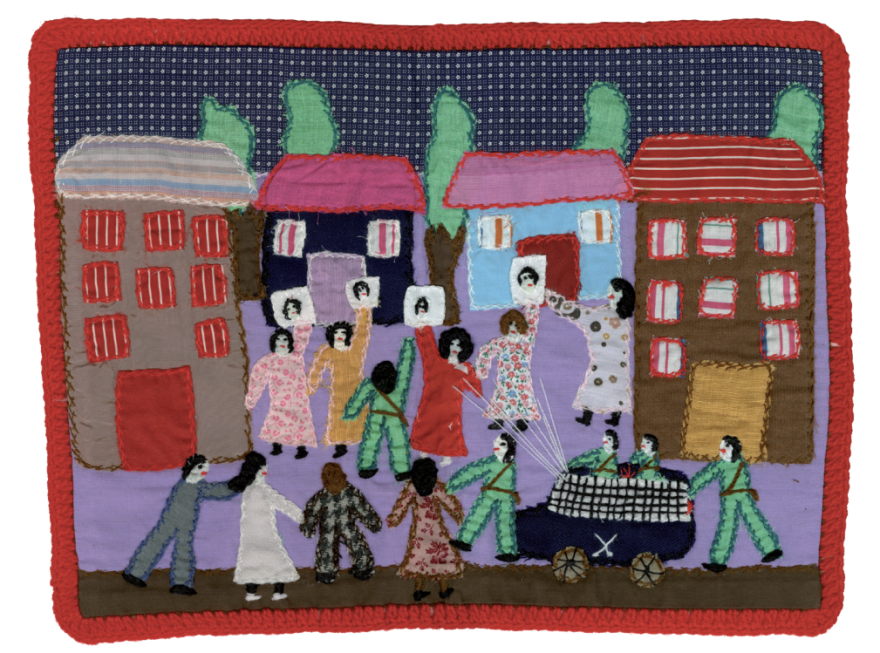
From Quilts to Resistance: Neva Zamil’s Research Explores the Art of Protest in Chile
Don and Noël Anger Art History Senior Thesis Research Fund supports student’s international fieldwork on textile art, political memory, and social change.
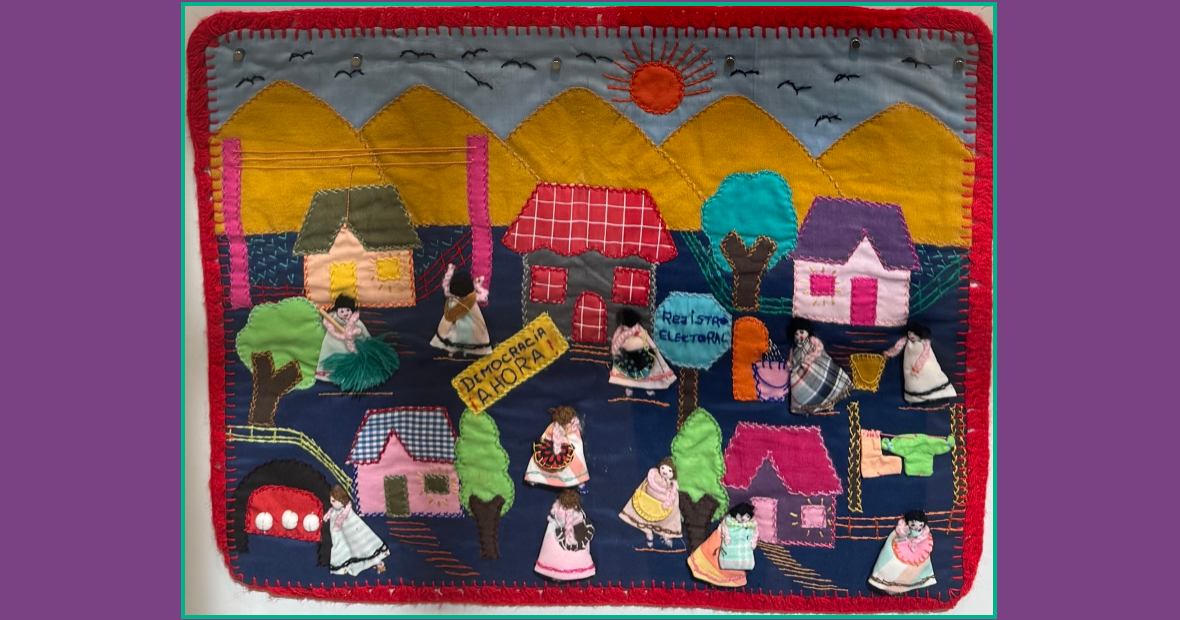

When Neva Zamil ’27 first encountered Chilean arpilleras, she saw more than colorful textiles. She saw stories.
Stories stitched together by women living under one of the most repressive dictatorships in modern Latin American history. Stories of loss, resilience, resistance, and survival. Stories that continue to resonate decades later.
This summer, Zamil, a rising fourth-year student majoring in art history and sociology at Grinnell College, will travel throughout Chile to research these remarkable works of protest art with support from the Don and Noël Anger Art History Senior Thesis Research Fund.
The award provides funding for art history majors to conduct summer research in preparation for their senior theses, allowing students to pursue in-depth projects that often require travel, archival work, interviews, and direct engagement with artworks and communities.
For Zamil, the opportunity allows her to explore how arpilleras - handmade textile artworks created during Augusto Pinochet’s military dictatorship in Chile from 1973 to 1990 - documented political oppression and became powerful tools of resistance.
“Many Chilean women turned to quilting practices to document the abuses occurring and communicate with the outside world,” Zamil said. “Using limited materials, they stitched discarded scraps of clothing onto burlap backings, creating colorful scenes that concealed deeply personal and political stories.”
While existing scholarship has examined the historical role of arpilleras, Zamil hopes to investigate how their meaning and influence have evolved in the decades since Chile’s transition to democracy.
“My research will investigate and contextualize the political, social, and cultural factors that led to the production of arpilleras and consider how this artistic tradition and the meaning behind it changed in a post-conflict setting,” she said. “I aim to place arpilleras within the broader tradition of protest art to understand how using art as a form of activism can facilitate community healing while creating tangible change."
Art, Activism, and Connection
Zamil’s interest in the topic sits at the intersection of her academic interests in both art history and sociology.
She is particularly drawn to works that emerge in response to political and social inequality and seek to create change.
“What I find particularly compelling about arpilleras is that they were made by women without access to formal artistic training or materials,” Zamil said. “Yet they are aesthetically impressive, emotionally impactful, and effective in communicating a subversive message.”
Unlike artworks that seem distant or inaccessible, she says arpilleras feel deeply familiar.
“To me, they are reminiscent of the quilts my own great-grandmother made and of the celebratory yet defiant murals that line the streets of my home in the Bay Area,” she said. “Rather than impress from afar, they invite participation.”
That combination of artistic expression, community engagement, and political action helped make her proposal stand out.
Professor of art history Jenny Anger said the project addresses an important gap in existing scholarship while demonstrating exceptional preparation and ambition.
“Neva plans to fill in a major gap in the scholarship thus far, namely how these quilts resonate today,” Anger said. “She plans to examine artworks not available here, visit archives, and spend time in local communities where this quilting flourished. One can say Neva has already done a lot of research in preparation for her research.”
Learning Beyond the Classroom
The summer research experience reflects a hallmark of Grinnell’s approach to the liberal arts: students pursuing original scholarship through direct engagement with people, places, and primary sources.
For art historians, fieldwork can be transformative.
“The opportunity to see objects close-up is invaluable,” Anger said. “A ceramic vessel up close, for example, is completely different from its digital replica. Interviewing people related to a topic is much more informative in person. Appreciation for the site and community in which something was made can only come from being there.”
The Anger Award exists specifically to make those experiences possible.
The fund supports research during the summer before a student’s senior thesis, encouraging art history majors to begin thinking about their projects well in advance and develop thoughtful plans for pursuing them.
“The award makes for much more intentional, thorough, and mature theses,” Anger said. “Without on-site preparatory research, these studies would necessarily have been more superficial.”
Past recipients have conducted research in locations including India, Turkey, the Czech Republic, Los Angeles, Atlanta, and New Hampshire.
The award will allow Zamil to extend her stay in Chile, where she has been studying abroad, and pursue research that would otherwise be impossible to access from the United States.
“This award has given me the financial support to conduct in-person research in local museum archives, visit operating workshops, conduct interviews, and document examples of arpilleras across the country,” Zamil said.
She hopes to speak with surviving members of arpillera workshops and their descendants, learn more about how the textiles were smuggled out of Chile during the dictatorship, and gain firsthand insight into how the works supported resistance efforts.
“I’m looking forward to talking with living members of the arpillera workshops and better understanding their perspectives on the value and efficacy of their work,” she said. “I also hope to participate in a workshop myself so I can develop a more embodied understanding of the process.”
The Power of Giving
The opportunity exists because of the generosity of donors who believe in the value of the humanities and undergraduate research.
The Don and Noël Anger Art History Senior Thesis Research Fund was established in honor of Professor Anger’s parents, whose support continues to open doors for Grinnell College students.
The fund reflects their belief that students should pursue the subjects that inspire them.
“They wanted to encourage our students to pursue their dream major,” Anger said. “The fund encourages students to pursue their dreams rather than just looking for what they imagine will be a remunerative major.”
For students like Zamil, that support is both practical and affirming.
“Beyond enabling me to connect more deeply with this material, receiving this award validates the importance of this project,” she said. “Arpilleras, textile-based artwork, and protest art are all under-researched and often under-respected areas of art history that deserve scholarship.”
Research with Global Relevance
As Zamil prepares for her last year at Grinnell, she sees this project as the beginning of a much larger journey.
In addition to her work in Chile, she will also travel to South Africa and Vietnam this summer as part of the Obama-Chesky Voyager Scholarship, expanding her exploration of textile-based protest art in different cultural contexts.
The experiences will provide the foundation for her senior thesis while helping shape future academic and professional interests.
“This research has sparked a profound interest in finding and documenting other examples of significant and successful protest art,” she said.
For Anger, that kind of intellectual curiosity is exactly what the award was designed to support.
“I hope students learn the joy of diving deep into a topic, learning to think carefully about it, and producing work that reflects so much effort and thought,” she said. “This process develops confidence and can be deeply gratifying, setting the stage for a life’s work.”
As Zamil embarks on her research journey, she hopes her work will not only deepen understanding of Chile’s arpilleras but also contribute to broader conversations about art, activism, and resistance.
“As authoritarianism mounts around the globe,” she said, “it is more important than ever to uplift international stories of resistance.”
Through the careful study of quilts stitched decades ago, she hopes to uncover lessons that remain relevant today, including reminders of the power of creativity, community, and courage in the face of oppression.