
Inaugural Impact of President’s Scholarship
Four students connected to their communities received a new scholarship celebrating their involvement.
Emma Stefanacci ’22
The class of 2029 was the first to be eligible for the new President’s Scholarship for Community Building. This scholarship covers full tuition and recognizes incoming Grinnellians who demonstrate intercultural understanding, empathy, cooperation, community-building, and an interest in positive change-making.
Recipients of the scholarship are individuals who have involved themselves in their communities and worked to make positive change.
The College awarded nine recipients of the President’s Scholarship in this inaugural class.
Involved from the Jump
Max Waldman ’29 and Nour Yousfi ’29 both initially heard about Grinnell through the QuestBridge application and received the scholarship due to their involvement in multiple activities while in high school.
When Waldman entered high school, he followed in his brother’s footsteps and joined many of the same organizations. He held leadership positions in tennis, robotics, speech and debate, human rights watch, and the Jewish student union. He says, “The goal from the start was ‘do something, be involved.’” He wanted a connection with peers and the community and soon dove into leadership positions to help achieve that goal.
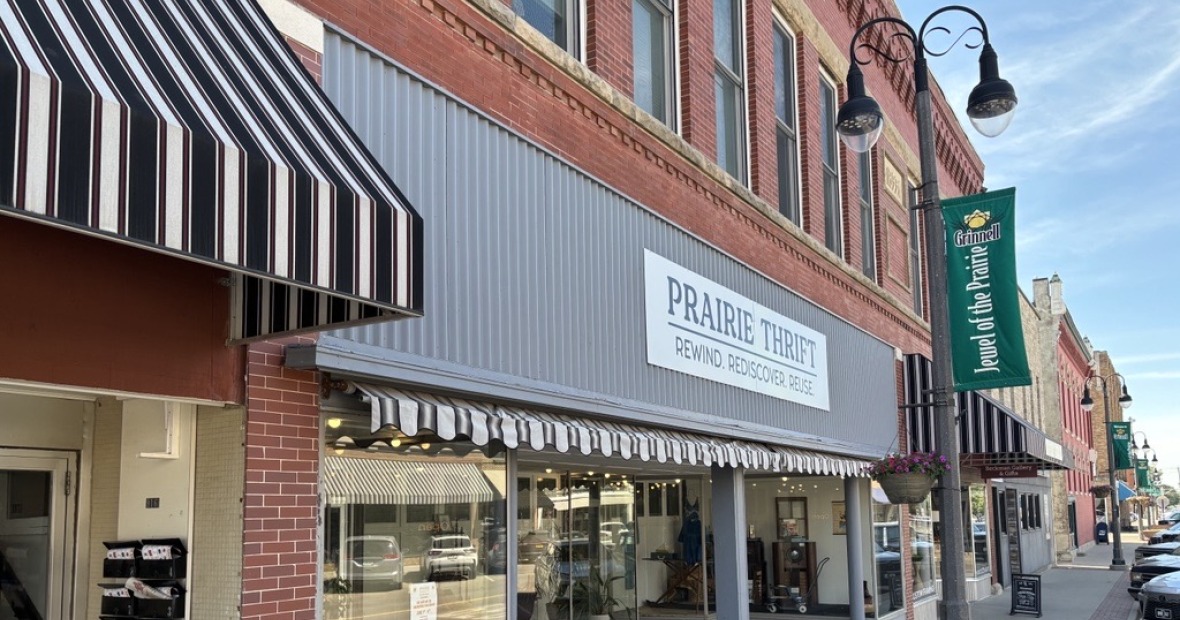
Being involved with so many things helped him build diverse skills that he can bring together and apply to his work at Grinnell and beyond. “I did a lot of things and gained skills and experiences through the leadership opportunities. I got so much more than I thought I would take away when I joined,” Waldman says. He uses the skills from these experiences to be involved with the Grinnell community, including helping to open the new Prairie Thrift store on Main Street.
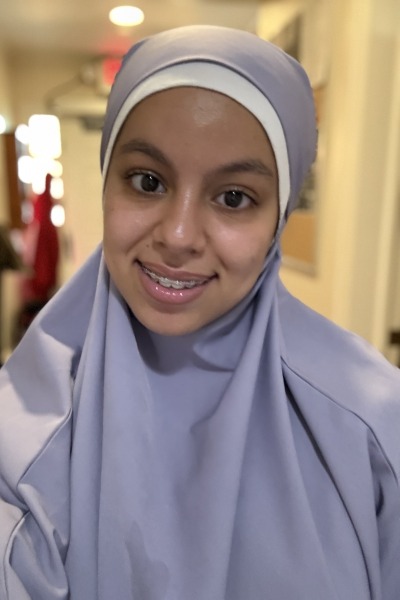
Yousfi had a different high school experience that involved a year off while she lived with family in Algeria and transferred from a challenging homeschooling curriculum to a public school with different emphasis. Throughout her time at the public school, she advocated for advanced learning opportunities to challenge herself and expand her education in areas that matter to her. Much of her involvement came from her interests in improving upon environmental issues she noticed. “It was really after moving to Algeria and seeing the piles of trash overflowing in the streets, which is so different from what we see here, that sparked my passion. Once we came back, I got more involved with environmental issues and started my balcony nursery,” Yousfi says. She was the president of the environmental club which helped replace invasive plants around the school with native species, she grew an extensive balcony garden of mostly edible plants which she gave to neighbors — sharing the literal fruits of her labor and learning about rearing many different species in the process, and she is developing an app to help solve the problem of trash pollution in Algeria she noticed while she lived there.
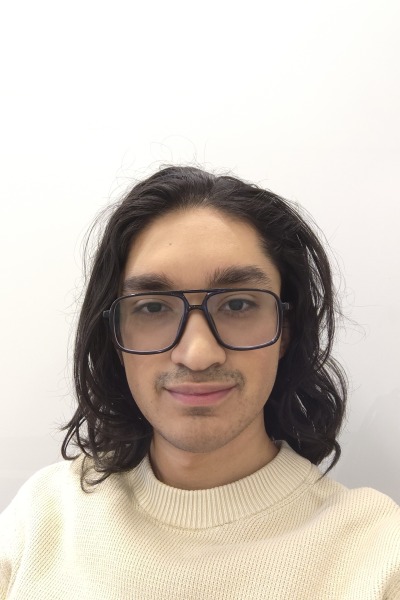
Ezequiel Molina ’29 was excited to come to Grinnell to explore an area outside his hometown of Dallas, TX. While in high school, he learned how important making and maintaining connections are, and he used the connections he built to grow projects that improve equity. He volunteered with his elementary and middle schools through a program called “Saturday School” to help students prepare for Texas standardized tests. He also spent a lot of time and energy with a program at his high school that seeks to connect the majority Hispanic student population to internships with American Airlines and IBM. “It was very cool because it was an opportunity that was not available to everyone, and I wanted to help create those opportunities for people who look like me,” Molina says. He was able to expand the program so it was more visible to underclassmen and available to more students, and is still helping to do event planning for the program while here at Grinnell.
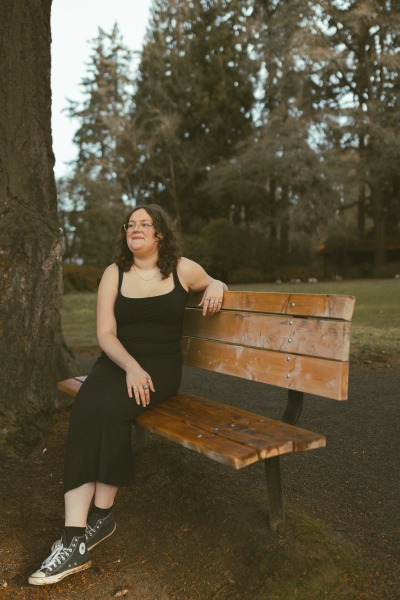
Lily Lockwood-Keil ’29 moved to Grinnell from Oregon because she was enticed by the ability to create her own experience and the student-oriented approach. Before attending Grinnell, Lockwood-Keil was involved in both the policy development and climate justice advocacy angles of supporting child welfare. She worked with organizations like Next Up Oregon, the Multnomah Youth Commission, Portland Youth Climate Strike, and received the Northwest Oregon Legislative Fellowship. Child welfare work is a cause close to Lockwood-Keil, but she found that opportunities to be involved were somewhat difficult to navigate. Throughout high school, she collaborated to organize city-wide climate demonstrations and worked with the Portland Police Bureau and the Portland Public School district to revise in-school safety policies. “Whether it was anti-violence work or climate justice work, if I saw an opportunity that I thought could help children in Oregon, I took it,” Lockwood-Keil says.
Each of these students found ways to be involved with their communities to make positive change in the areas they are passionate about. It’s this dedication and energy that the College celebrates with the President’s Scholarship for Community Building.
Continued Connection
While continued community engagement is not a requirement of the scholarship, these students care deeply about community and have found different ways to involve themselves here at Grinnell.
Lockwood-Keil plans to join the Grinnell Advocates next year and is working with another student to organize Grinnell students in programs around environmental justice. She says, “It’s clear that there is energy on campus and students want to be involved in this work, so I want to step up and be the organizing body to shepherd that energy.” She hopes to expand the public events and focus on building community relationships since that is where people feel the most responsibility and passion.
Yousfi and Molina also see ways to get involved with campus and the community. Yousfi has volunteered with the Mayflower Community and will start working with them as a CNA. On campus, she has been elected as a second-year senator for student government, started a campaign to install bidets around campus, and found numerous other ways to integrate herself into the community. She also wants to take her interest in plants and get involved with the College garden — possibly adding hydroponics around campus — and continuing to increase access to edible plants and healthy foods.
Molina has found community on campus through the computer science table and plans to join the Grinnell chapter of Girls Who Code — a group of students, supported by the CLS who teach middle schoolers skills in coding and robotics.
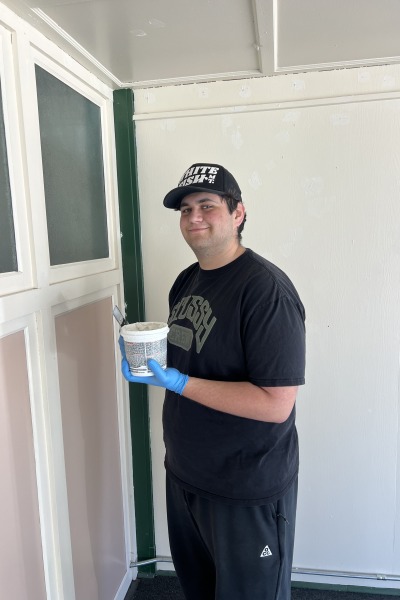
Waldman has found ways to continue with similar projects to what he was involved in during high school including speech and debate, Chaverim, and plans to manage the tennis team. He is also volunteering through the CLS service leadership work-study program to set up and help open Prairie Thrift — the new nonprofit thrift store on Main Street, dedicated to reinvesting its net proceeds back into the downtown district. Waldman says, “The thrift store has been great. I feel like I’ve been able to help out with the skills I’ve learned from my other experiences, like using the tools. And it’s been a good entry into the community. The manager’s family has lived in town for something like 100 years, so I’ve talked to so many people who have come in to volunteer and learned their stories, which makes me really see the small-town charm firsthand.”
The President’s Scholarship for Community Building is one of the ways the College celebrates students who value community connections and want to make the world around them better. These students are excellent examples of just this. Lockwood-Keil highlights the reciprocity saying, “I chose Grinnell for its student focus and all the opportunities for students to follow their passions, and getting this scholarship really felt like Grinnell was choosing me back.”
Learn more about the President’s Scholarship for Community Building and submit your application.