
Promotions and Tenure for Grinnell Faculty
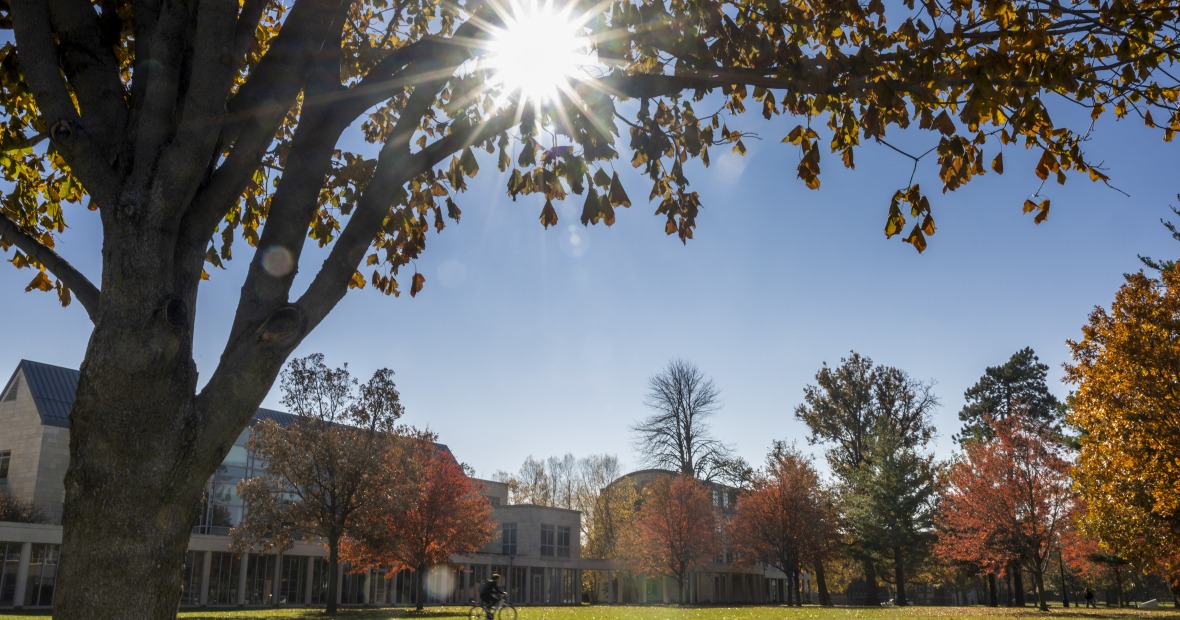
Grinnell College is proud to announce that 15 faculty members have received promotions and/or been awarded tenure this spring, reflecting the excellence and dedication of Grinnell’s faculty, and their commitment to teaching.
“Grinnell’s faculty are spectacular—in their accomplishments, their dedication, and their commitment to all aspects of student learning,” Dean Feingold says. “I congratulate this group of teachers and scholars on this milestone in their careers, and look forward to working with them in the years to come. Grinnell is fortunate, indeed, to count them among our faculty.”
The newly promoted and tenured faculty are listed below.
For Promotion from Assistant Professor to Associate Professor with Tenure
Dixuan Yujing Chen, Associate Professor of Religious Studies
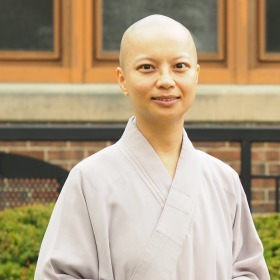
Dixuan Yujing Chen joined Grinnell College in 2017 as a visiting professor and began a tenure track position in 2019. Her teaching focuses on east Asian religions, Zen Buddhism, religious healing practices, and gender in religion. She contributes to a range of concentrations, including East Asian Studies; Gender, Women’s and Sexuality Studies; and Science, Medicine & Society. In 2022-23, she received an Early Career Faculty Teaching Fellowship from the Wabash Center for Teaching and Learning in Theology and Religion. Her scholarship sits at the intersection of Buddhist studies, health studies, and historical studies. Her book project, Breathing for Balance: Chinese Buddhist Views on Life and the Body, explores evolving concepts of breath, body, and health in Chinese Buddhism.
Chen is chair of the East Asian Studies concentration and is a member of the Instructional Support Committees. Outside the College, Chen is on the Executive Board of Directors for the Society for the Study of Chinese Religions and the steering committee of the Chinese Religions Unit of the American Academy of Religion; she is a participant in “Community, Solidarity, and Democracy,” a project of the American Council of Learned Societies and the Henry Luce Foundation.
Jennifer Dobe, Associate Professor of Philosophy
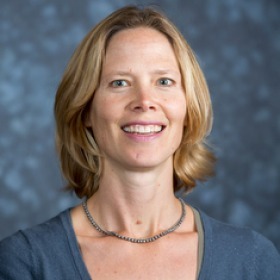
Jennifer Dobe has taught philosophy at Grinnell since 2005, serving as assistant professor since 2018. Her courses focus on value theory, an interdisciplinary subfield of philosophy that investigates areas like moral good, aesthetics, and social justice, and the history of philosophy. With colleagues John Fennell and Joe Neisser, Dobe developed the department’s very popular gateway course Philosophy for Life, which helps students see philosophy as an inquiry into living well.
Dobe’s scholarship focuses on Enlightenment philosopher Immanuel Kant and idealist philosopher Friedrich Wilhelm Joseph Schelling, who was influenced by Kant’s work, and advances new accounts of their work’s implications for contemporary ethical frameworks, aesthetic categories, and sociopolitical practices. Her current work explores how Kant’s aesthetics were subsequently challenged by Schelling and connects Kant’s aesthetics to topics as diverse as the role of repression in implicit bias and the work of contemporary feminist artists like Kara Walker.
Dobe has served on the Gender, Women’s and Sexuality Studies committee since 2015. She has also served on the Title IX Committee, the Scholarship Selection Committee, and the Diversity and Inclusion Committee. She is currently serving a two-year term on the Instructional Support Committee.

Fernanda Eliott, Associate Professor of Computer Science
Fernanda Eliott joined Grinnell’s Department of Computer Science in 2020 after completing a postdoctoral fellowship at Vanderbilt University. Elliott’s teaching duties include courses on artificial intelligence and object-oriented problem-solving, data, and algorithms. She teaches Grinnell’s 300-level software design and development course. Eliott’s scholarship integrates artificial intelligence (AI), cognitive science, and philosophy to explore where meaningful decisions come from and how to enhance human-technology partnerships that promote inclusion and assist people.
Throughout her research, Eliott has been a prolific and successful mentor of research students; she has overseen more than 30 student research projects during her time at Grinnell, and her students have presented their work in graduate and professional venues (with several coauthoring prizewinning papers with her). Eliott’s research was supported by Grinnell’s Harris Faculty Fellowship, and she was also selected by the Research Corporation for Science Advancement to participate in a three year incubator on the molecular basis of cognition.
Eliott has co-led a summer workshop on AI, facilitated conversations on AI with the support of the Center for the Humanities, participated in two task forces leading the College’s response to the rise of AI, and, with colleagues Sarah Purcell (History) and Shanshan Rodriguez (Physics), has launched a space for AI discussion and brainstorming called AI Aura.
Makeba Lavan, Associate Professor of English
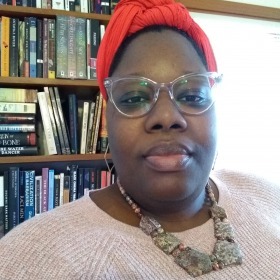
Makeba Lavan joined Grinnell College in 2019 as a Visiting Instructor of English and became a tenure-track Assistant Professor in 2020. Her courses focus on African American literature. She thoughtfully crafts her reading lists to include authors from a wide range of backgrounds, including those who are disabled or LGBTQIA+. In Lavan's courses, she emphasizes the connection between literature and the arts by providing opportunities for students to engage with artistic work.
Lavan’s ongoing book project, Miscegenation Nation, juxtaposes contemporary representations of interracial relationships in film and TV with broader histories of efforts in the United States to police racial boundaries. She was selected as the College’s third Humanities
Center Fellow in 2022-23. Lavan has thrice been featured on the Talk of Iowa Book and she and colleague Stephanie Jones (Education) recently appeared on John Drabinski’s Black Studies podcast.
Lavan has played a key role in the development of the ADS program, having served on its steering committee since 2021. Her service has also included work on inclusion initiatives, including the Board of Trustees’ Anti-Racism Planning Group, the Classroom Climate Committee, and the Operation Black Joy Committee, of which she was co-chair.
Viktoria Pötzl, Associate Professor of German Studies
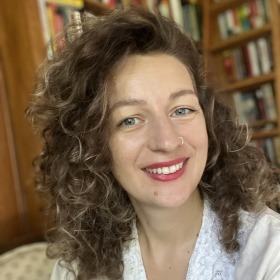
Viktoria Pötzl joined the Department of German Studies at Grinnell College in 2019 and was appointed a tenure-track Assistant Professor in 2022. She has taught across Europe, Russia, the Middle East, and the United States. At Grinnell, her teaching is marked by a pedagogical philosophy grounded in anti-racist and anti-fascist ethics, as well as a sustained commitment to inclusive and equitable classroom practices. She has taught language courses and upper-level and interdisciplinary courses, including Contemporary Germany Through Media, Feminist Literatures. She has also developed innovative English-language offerings.
Pötzl’s scholarship lies at the intersection of German–Jewish studies, gender studies, and nationalism studies, with a particular focus on underexamined authors and transnational literary contexts. Her first monograph, Nation, Narration und Geschlecht (2018), has been translated into English and is forthcoming with SUNY Press in 2026. Her current research includes a second monograph in progress on representations of Palestine/Israel in Jewish-Austrian literature.
Within the College, she currently serves on the Curriculum Committee and co-chairs of the European Studies Concentration. Professionally, she is an active member of several scholarly associations and serves as a peer reviewer for journals and academic presses, in addition to publishing multiple book reviews.
Shanshan Rodriguez, Associate Professor of Physics

Shanshan Rodriguez joined Grinnell in 2018 as a visiting assistant professor of physics and began her tenure-track position in 2021. She regularly teaches courses on mechanics, optics, electromagnetic theory, and astrophysics. Rodriguez also teaches in the introductory physics sequence. She has developed resources to help prepare students to pursue research experiences.
With Leo Rodriguez, she coauthored On The Principle of Holographic Scaling: From College Physics to Black Hole Thermodynamics (Institute of Physics, 2019), and with collaborators L. R. Ram-Mohan (WPI) and Sathwik Bharadwaj (WPI), she has coauthored the forthcoming volume Wavefunction Engineering – A New Paradigm in Materials Design and Growth at the Nanoscale (Word Scientific, expected 2026). She is affiliated with the Harvard‐Smithsonian Center for Astrophysics as an external collaborator. In her time at Grinnell, Rodriguez has supervised 23 individually mentored student projects. Her research has been supported by Grinnell’s Harris Faculty Fellowship.
Rodriguez’s College-wide service has included roles on the Instructional Support Committee and the Scholarship Selection Committee. Beyond the College, she has served as a reviewer for the Institute of Physics and the NSF, and she was a member of the local planning committee for the APS Conference for Undergraduate Women in Physics at the University of Iowa in January 2023.
Nicky Tavares, Associate Professor of Film and Media Studies

Nicky Tavares joined Grinnell College in 2019 as Assistant Professor of Film and Media Studies, founding the Film and Media Studies concentration. In this role, she created the concentration’s entire curriculum. Her courses both help students develop individually as artists and prepare them to work in the highly collaborative field of media production. Tavares has striven to connect her students with the rich film and media culture of Iowa and the Midwest. She also incorporates alumni and other media professionals as mentors, and offers individual study opportunities for students.
Tavares is a media artist and filmmaker whose work sheds light on systemic issues such as biases in healthcare, the student loan debt crisis, climate change, and xenophobia. Her most recent completed work, A Telephone for God, was awarded Best Short Documentary by the Kraken International Film Festival in Milan. Over her time at Grinnell, Tavares has exhibited internationally at 30 competitive film festivals and screenings; she has also received four competitive artists’ residencies.
Tavares’s is Chair of Film and Media Studies has included leading the development of the concentration’s curriculum, chairing the study of 1013 Broad Street as the future home of FMS, hiring new faculty members, and organizing programmatic activity through the Grinnell Film Society.
Marion Tricoire, Associate Professor of French
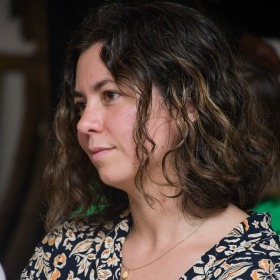
Marion Tricoire joined the Department of French and Arabic at Grinnell College in 2019 as a specialist in Francophone African literature. Her teaching expands, decolonizes, and challenges narrow conceptions of the Francophone world. The dynamism of her teaching extends beyond the classroom through invited speakers, community-building initiatives, and engaged advising.
Tricoire’s research on contemporary Francophone African literature focuses on urban spaces, neglected voices, and HIV/AIDS fiction. Her scholarship has appeared in leading journals in the field, including the Journal of the African Literature Association and The French Review. Her research is notably grounded in transnational engagement, including fieldwork and scholarly collaboration in Cameroon, Senegal, and Côte d’Ivoire, and active participation in literary and academic events on the African continent as well as North America and Europe.
Tricoire has served on the Faculty Organization Committee as a Humanities Division representative, on the Scholarship Selection Committee, and on the board of the Institute for Global Engagement, contributing to policy discussions and the advancement of global learning initiatives. She also serves as Faculty Liaison to the French House, organizing events, supporting off-campus study initiatives, and mentoring junior colleagues. Professionally, she contributes as a peer reviewer for several journals and remains actively engaged in scholarly communities in African and Francophone studies.
For Awarding of Tenure
Hilary Eklund, Professor of English
Hilary Eklund joined Grinnell College in 2024 as professor of English. Eklund, whose teaching focuses on Renaissance literature, encourages students to see the works of Shakespeare and other Renaissance thinkers not as sacrosanct classics but as a series of invitations for critical play and reinterpretation. Moving away from reverence of to engagement with Renaissance texts allows Eklund’s students to treat them as “time machines,” helping them understand the experiences and perceptions of earlier reading publics.
Eklund’s scholarship deals with the implications of the 16-Century English agrarian
revolution, in which a growing population drove the English to “improve” uncultivated land at home and colonize land abroad. Her current book project, The Unfast Imagination: Reading Early Modern Wetlands, explores the moral attitudes and material practices that shape human interactions with wetlands during the rise of the English and Spanish empires, drawing on case studies ranging from English fens to the lake basin of Tenochtitlan to the coastal marshes of Virginia.
Eklund has participated in departmental assessment work and remained active in her service to the profession. She recently completed a three-year term on the executive committee of the International Spenser Society (ISS). She has also served as a manuscript reviewer and coach. Eklund will soon begin serving on the Eco Campus and Environmental Studies committees at the College.
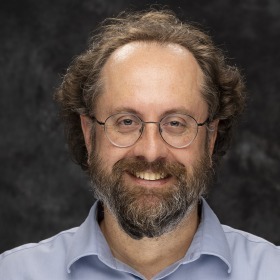
James Palmer, Associate Professor of History
James Palmer joined Grinnell College in 2025 and teaches courses on topics like the Crusades and medieval Europe and the early modern world. His courses make space for deliberate questioning of received knowledge about “Western civilization” and insist on the critical appraisal of how key categories like race, class, and gender worked in the premodern past.
Palmer’s research focuses on history related to medieval Rome, looking at the intersections of religion, politics, economy, and community. His first book, The Virtues of Economy: Governance, Power, and Piety in Late Medieval Rome (Cornell, 2019), examined the transformation of Rome, at the turn of the fifteenth century, from an autonomous commune to a city formally ruled by the papacy. Palmer’s ongoing research deals with Italian involvement in the Crusades, including how the categories “Italy” and “Italian” were understood during this period, which also saw the rise and fall of Italy’s city communes.
Palmer serves as secretary-treasurer of the Society for Italian Historical Studies. He also chairs the Medieval Academy of America’s Van Courtlandt Elliot Prize Committee, which provides an award for the best article by an early-career faculty member.
For Retention to the Permanent Faculty
Gina Schlesselman-Tarango, Associate Professor and Science Librarian

Gina Schlesselman-Tarango joined Grinnell College in 2023 as its Science Librarian, providing extensive course-integrated information literacy instruction across disciplines and delivering more than twenty sessions annually, while also offering individualized research consultations. Her teaching emphasizes active learning, collaborative inquiry, and the development of practical research strategies.
Schlesselman-Tarango’s program of scholarship broadly examines the intersections of race, gender, power, and information; it includes several peer-reviewed articles, book chapters, and edited volumes that have helped shaped discourse in library and information science. Her edited collection Topographies of Whiteness: Mapping Whiteness in Library and Information Science (Library Juice Press, 2017) and her co-edited volume Information, Power, and Reproductive Health (Litwin Books, 2025) represent a significant contribution to the field.
Schlesselman-Tarango is an active contributor to professional and institutional service. She currently serves on the editorial board of Libraries: Culture, History, and Society and on committees within the Association of College and Research Libraries. At Grinnell, her service includes participation in the Assessment Committee, Health Professions Advisory Committee, and library leadership through co-leading the Research Services cluster.
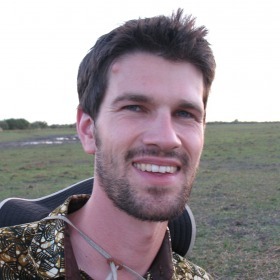
Promotion to the Rank of Professor
Leif Brottem, Professor of Global Development Studies
Leif Brottem joined Grinnell College in 2014 as an assistant professor in Global Development Studies and earned tenure in 2020. He teaches three courses in the interdisciplinary concentration of Global Development Studies (GDS) and two courses in Geographical Information Systems (GIS). He has also served on the Scholarship Selection Committee, Wilson Center advisory board, and the Environmental Studies Concentration Committee.
Brottem has recently published several articles based on a U.S. Fish and Wildlife Service grant he secured along with Matthew Turner (Wisconsin) entitled “Transhumance and conservation at a crossroads: comparative investigation across West and Central African landscapes of global biodiversity significance.” These articles explore the relationships between livestock herders and other groups, including conservationists, farmers, and other community members, as the herders migrate with their herds to pursue water and pasture. This grant has evolved into an ongoing project, Transhumance and Conservation at a Crossroads, which continues to influence conservation and development policy in Central Africa. Brottem has also served as an expert consultant to USAID, the World Bank, and the United Nations as they seek more effective ways of engaging with pastoralist communities.

Charlotte Christensen, Professor of Physics
Charlotte Christensen joined the Department of Physics as an assistant professor in 2014 and earned tenure in 2020. Her teaching load includes core physics courses like mechanics, modern physics, and electromagnetic theory, as well as an upper-level course on cosmology and a course on the universe and its structure for nonmajors. Before and since earning tenure, Christensen has led departmental efforts to incorporate computational approaches into the physics curriculum, starting with the second-year mechanics course. She has been deeply involved in inclusion efforts in the Science Division through leadership in the Grinnell Science Project, the Gender Minorities in Physics Group, and the Clare Boothe Luce faculty mentoring group.
Christensen’s research explores the processes that drive galaxy evolution, answering such questions as “What happens to the material removed from galaxies?” and “What processes limit star formation in galaxies?” She uses state-of-the-art computational simulations of the evolution of galaxies starting shortly after the Big Bang. She has recently completed a six-year NSF CAREER grant on the evolution of low-mass satellite galaxies and has won a grant from the Research Corporation for Science Advancement. Christensen has published more than a dozen research articles since earning tenure, two of which include Grinnell students as first authors.
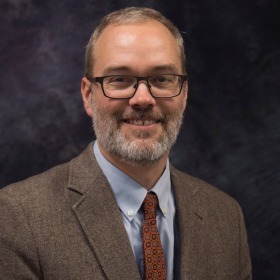
Peter Hanson, Professsor of Political Science
Peter Hanson joined Grinnell College in 2016 and earned tenure in 2018. A specialist in American politics, he teaches courses on constitutional law and American political institutions, and he has developed a new course entitled Public Attitudes on American Democracy tied to his work on the Grinnell College National Poll. Hanson’s most notable service to the College is his directorship of the Grinnell College National Poll, which has been run 12 times since 2018. The aim of the poll is to explore the health of American democracy. Hanson has also served on the Committee on Academic Standing, the Tutorial and Advising Committee, the Writing Advisory Committee, the Presidential Task Force on Teaching Excellence, and a College task force on artificial intelligence.
Hanson’s earlier research focused on Congress, the appropriations process, and party politics. Since earning tenure, he has published several papers addressing follow-up questions from his book Too Weak to Govern: Majority Party Power and Appropriations in the US Senate (Cambridge, 2014). Hanson's current research addresses populism and the challenges it poses to liberal democracy, drawing on both his experience with the Grinnell Poll and the unexpected election of Donald Trump in 2016.
Phillip Wiley Jones, Professor; Humanities Librarian and Coordinator of Research Services
Phillip Wiley Jones joined the Grinnell College Libraries in 2004. He serves as consulting librarian to multiple humanities departments and interdisciplinary programs, including Philosophy, Religious Studies, Spanish, and Latin American Studies, and he co-leads the Libraries’ Research Services cluster. Jones coordinates the Libraries’ comprehensive research literacy program, including Tutorial instruction, course-integrated sessions, and individual research consultations. Jones contributes actively to the intellectual and professional life of the College. He has organized major campus events, including Scholars’ Convocation visits and the Libraries’ Faculty and Staff Research Series, and has supported national research initiatives through Project Information Literacy. His extensive committee service includes the Tutorial and Advising Committee and the Center for the Humanities Advisory Board.
Jones’ scholarly and creative work reflects the breadth of his librarianship. His peer-reviewed publications include articles in College & Research Libraries and Libraries & the Cultural Record, as well as book chapters on assessment and peer research support in academic libraries. In addition to his scholarly writing, Jones is also an accomplished creative writer, with fiction published in respected literary journals, including a 2025 story in Chicago Quarterly Review.